
Spaced repetition explained
Why reviewing at the right interval is the key to retaining mastery-level Brazilian Portuguese C2 vocabulary
You have C1 Brazilian Portuguese. You read a Folha column without effort, write a structured ensaio, switch register between coloquial and formal in conversation, and follow a Roda Viva debate without subtitles. C2 is the next step. Literary register on the page, fine semantic nuance in your word choice, modismos and provérbios that arrive on cue, and the cultural references that Brazilian public discourse takes for granted. The mental effort drops to zero.
This guide covers the 1,000+ vocabulary items that close the gap between advanced and near-native Brazilian Portuguese. Literary register comes first, since it is the most visible marker of C2 reading. Then fine semantic nuance, lower-frequency modismos and provérbios, juridiquês for institutional contexts, stylistic and rhetorical figures for written production, scholarly discourse for the saggio acadêmico, and the literary and musical canon that contemporary Brazilian writers reach for as shared shorthand.
Each of the seven phases below includes a ready-to-use AI prompt. Paste it into MindCards and your first deck for that phase builds in seconds. Spaced repetition then schedules every card at the right interval, so your review time goes to the items you are actually forgetting. The whole guide is built for serious CELPE-Bras Avançado Superior candidates and for advanced learners working in Brazilian Portuguese professionally.
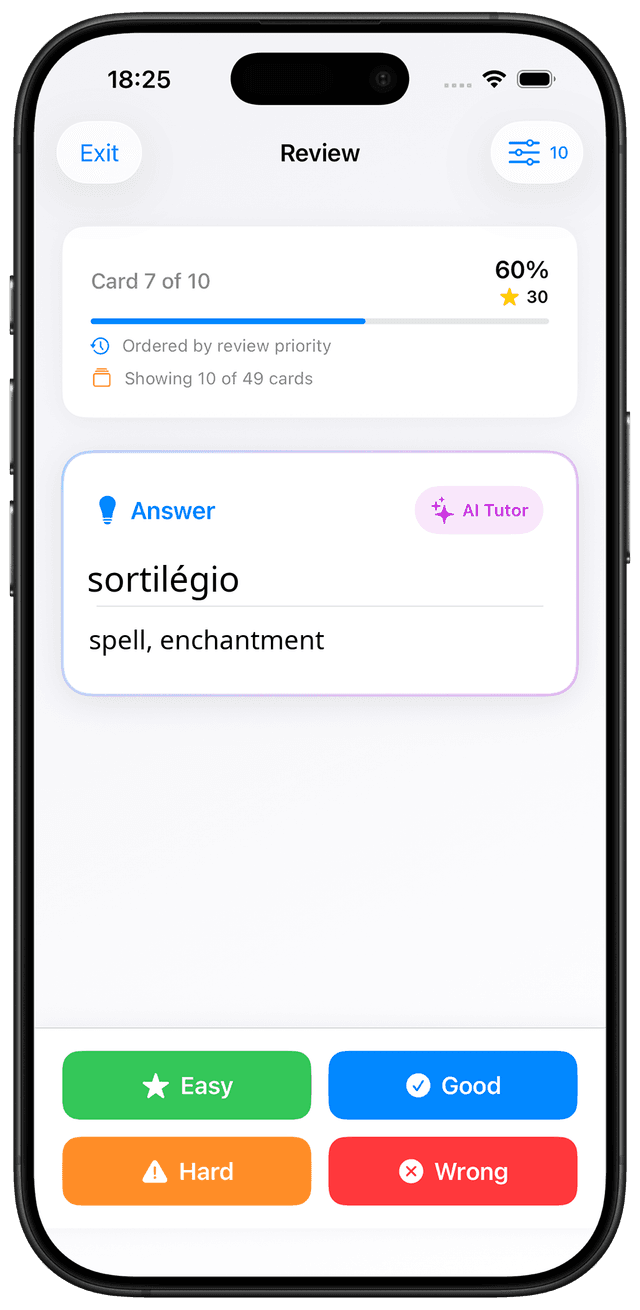
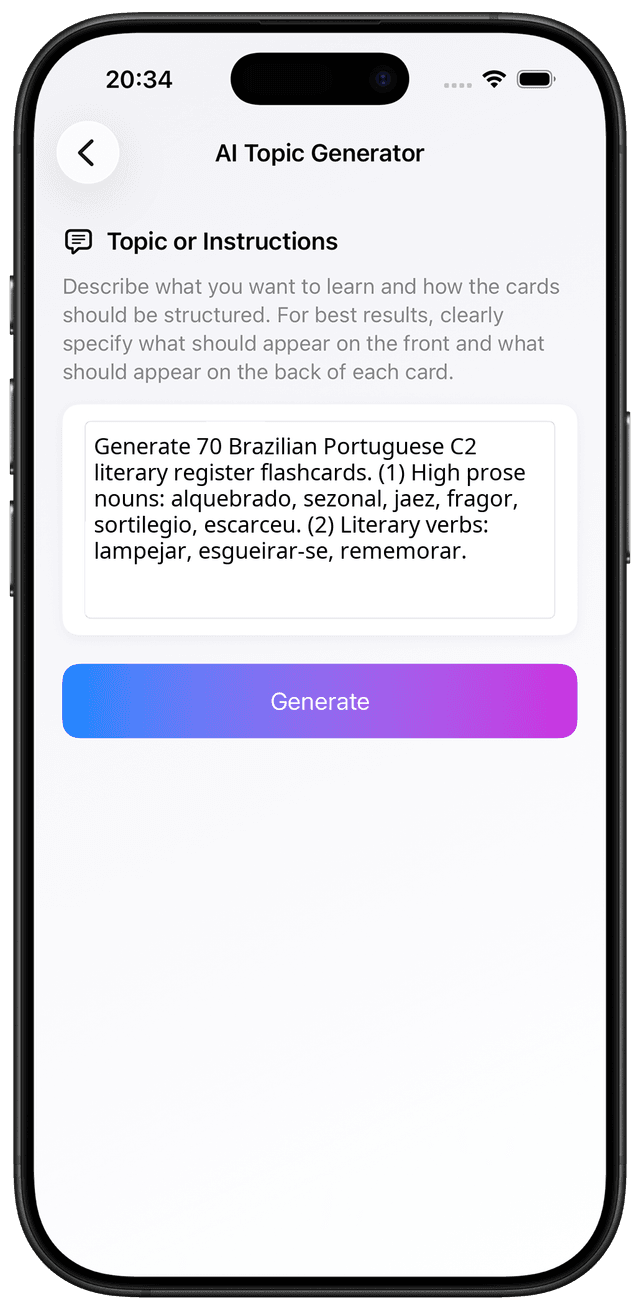
C2 Brazilian Portuguese opens up a layer that C1 only brushes against. The vocabulary that Machado de Assis built into Memórias Póstumas, that Guimarães Rosa wove through Grande Sertão: Veredas, that Clarice Lispector pressed into A Paixão Segundo G.H., lives above formal standard Portuguese. Words like alquebrado, sezonal, jaez, fragor, lampejar, e sortilégio show up constantly in serious Brazilian prose and almost never in everyday speech. Reading a Drummond chronicle or a Lygia Fagundes Telles novella without leaning on a dictionary depends on this layer.
This is not academic vocabulary in the C1 sense. It is the literary register Brazilian writers reach for to set tone, build atmosphere, and signal intent. A C1 reader follows the plot. A C2 reader notices the word choices the author is making line by line.
Why start here? Literary register is the most visible marker of C2 reading in Brazilian Portuguese. CELPE-Bras Avançado Superior reading passages pull from contemporary Brazilian literary essays and high-register journalism that assume this vocabulary. Without it, the texts feel thicker than they should.
The strategy: Each card pairs a literary item with a real passage from twentieth and twenty-first century Brazilian prose, plus a contemporary-standard equivalent so you feel the register gap directly.
Generate 70 Brazilian Portuguese C2 literary register flashcards. Three groups: (1) High prose adjectives and nouns: alquebrado, sezonal, jaez, fragor, sortilégio, escarcéu, alvitre, escárnio, intumescido, exíguo, parco, melífluo, augusto, recôndito, lassidão. (2) Literary verbs and constructions: lampejar, esgueirar-se, rememorar, soçobrar, deslindar, esquadrinhar, conspurcar, embevecer-se, deplorar, soerguer, tergiversar, perpassar. (3) Contemporary-standard equivalents for direct contrast: brilhar de repente, sair de fininho, lembrar bem, afundar, descobrir, examinar, sujar, ficar encantado, lamentar, levantar com força, enrolar. Front: literary item plus sentence from Machado, Guimarães Rosa, Clarice Lispector, Drummond, or Lygia Fagundes Telles. Back: contemporary equivalent plus register note plus author context.
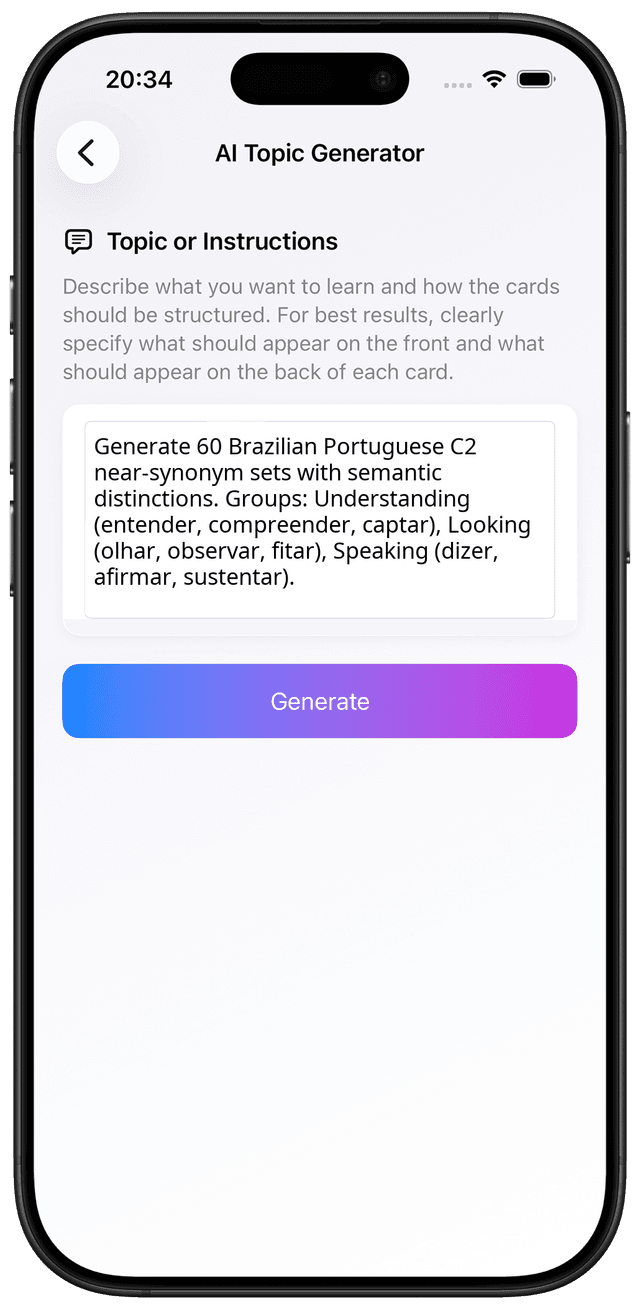
Brazilian Portuguese is dense with near-synonyms that share an English translation but carry very different shades. Compreender and entender both translate as understand, but compreender implies depth and reflection while entender is immediate. Observar and olhar both translate as look, but observar brings deliberate attention. Deliberar and decidir both translate as decide, but deliberar lives in formal and institutional contexts. C2 is where you stop picking between these by feel and start picking by purpose.
These choices show up in writing more than in speech. A C2 writer lands the right verb the first time. A C1 writer often defaults to the more common option and reads as flatter than the source intended. CELPE-Bras Avançado Superior writing rubrics reward precise lexical choice within the same semantic field, and Brazilian assessors notice the difference between medo and temor the second they read it.
Why this matters: Lexical precision is the C2 marker that gives your written Brazilian Portuguese voice. Native readers register the difference between susto and pavor instantly, even if they could not explain the rule.
The strategy: Cards present near-synonym sets in minimal-pair contexts so you build the choice habit, not just the vocabulary list.
Generate 60 Brazilian Portuguese C2 near-synonym sets with semantic and register distinctions. Six groups: (1) Understanding: entender, compreender, captar, apreender, depreender, alcançar (no sentido de captar). (2) Looking: olhar, observar, fitar, contemplar, espreitar, vislumbrar. (3) Speaking: dizer, afirmar, sustentar, declarar, asseverar, alegar, proferir. (4) Fear: medo, temor, susto, pavor, apreensão, receio, sobressalto. (5) Beauty: bonito, belo, formoso, lindo, gracioso, primoroso, ímpar. (6) Deciding: decidir, deliberar, resolver, dirimir, sentenciar. Front: synonym set plus a context sentence where one specific item fits. Back: English plus which item fits why plus register and emotional shade note.
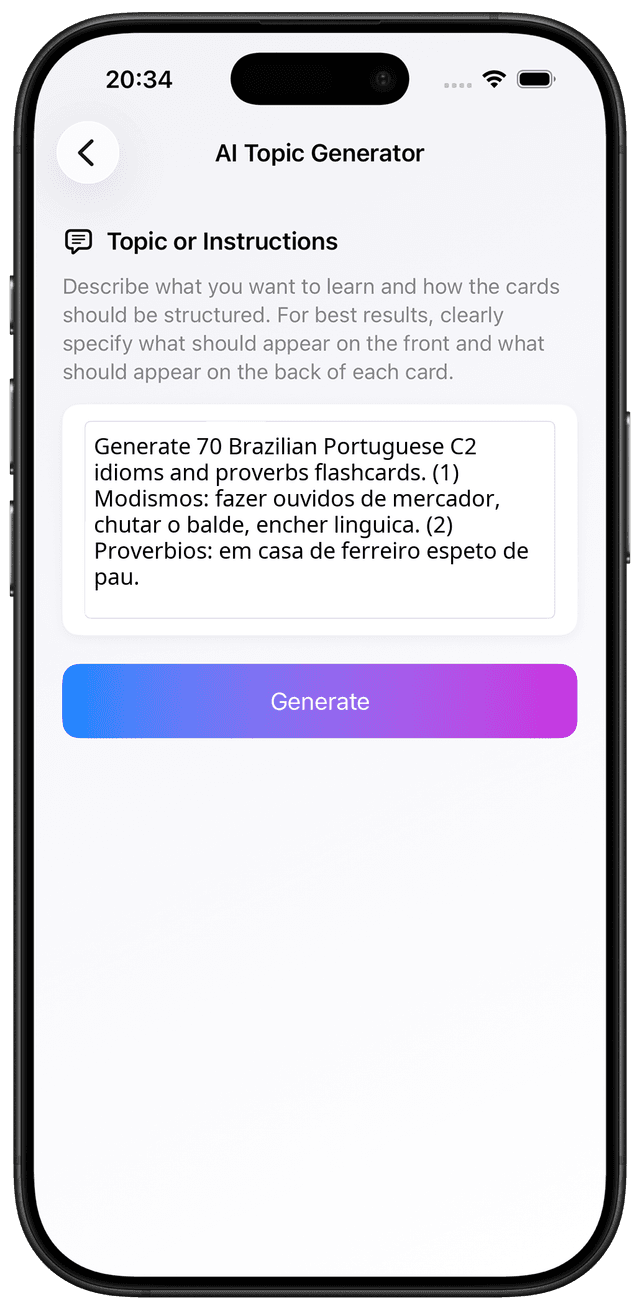
C1 covers high-frequency Brazilian idioms found in journalism and educated speech. C2 goes deeper. Lower-frequency modismos turn up in literature, theatre, and political commentary, and the provérbios that Brazilians pull out in conversation carry cultural weight that a literal translation cannot capture. Knowing that fazer ouvidos de mercador means feigning deafness on purpose, or that em casa de ferreiro espeto de pau lands a specific cultural irony, is part of what separates C2 comprehension from C1 comprehension.
Brazilian proverbs come loaded with regional flavour. Sertão expressions, nordestino sayings, gaúcho turns of phrase, and mineiro chestnuts all show up in national writing. Using one well at the right moment is a mark of cultural fluency that no amount of grammar can fake. Using one wrong is worse than not using it at all.
Why this comes third: CELPE-Bras listening and reading tasks at the Avançado Superior level regularly include modismos and provérbios without gloss. You either know them or you mishear the passage.
The strategy: The deck pairs each item with a real-use context, a literal meaning, and a pragmatic note on when a Brazilian speaker would actually deploy it.
Generate 70 Brazilian Portuguese C2 idioms and proverbs flashcards. Three groups: (1) Lower-frequency modismos: fazer ouvidos de mercador, dar com os burros n'água, chutar o balde, encher linguiça, queimar a largada, fazer tempestade em copo d'água, jogar a toalha, dar com a língua nos dentes, dourar a pílula, ter o rei na barriga, descascar abacaxi, tirar o cavalo da chuva. (2) Core provérbios brasileiros: em casa de ferreiro espeto de pau, quem não tem cão caça com gato, água mole em pedra dura tanto bate até que fura, de grão em grão a galinha enche o papo, cada macaco no seu galho, pimenta nos olhos dos outros é refresco, devagar se vai ao longe. (3) Regional expressions across Brazil: arretado (Northeast), trem bão (Minas), tri legal (RS), oxente, vixe Maria, tá ligado (SP). Front: expression plus context sentence. Back: literal meaning plus pragmatic use plus when a Brazilian speaker would say it.
Brazilian legal Portuguese, often called juridiquês, has a vocabulary and a syntax that almost never appear in everyday speech and almost always appear in court decisions, statutes, contracts, and serious legal journalism. Working in Brazil at a professional level, reading STF decisions, dealing with cartórios, or following the political-judicial news in Folha or O Globo requires real fluency in this register.
Juridiquês uses heavy subjunctive constructions, archaic conjunctions, and a vocabulary built largely from Latin roots. Phrases like nos termos do artigo, ad cautelam, data venia, em sede de cautelar, hodiernamente, mister se faz, e cumpre ressaltar que define the register. These structures feel impenetrable at first read and become natural once you have seen the same forms across enough documents.
The goal: Turn juridiquês from a wall of text into a readable register. CELPE-Bras Avançado Superior reading frequently includes institutional and legal passages, and a C2 speaker working in Brazil will see this language constantly.
The strategy: Cards are grouped by document type so you build the cognitive frame as well as the vocabulary. Court decision, statute, contract, and public notice each carry their own typical formulas.
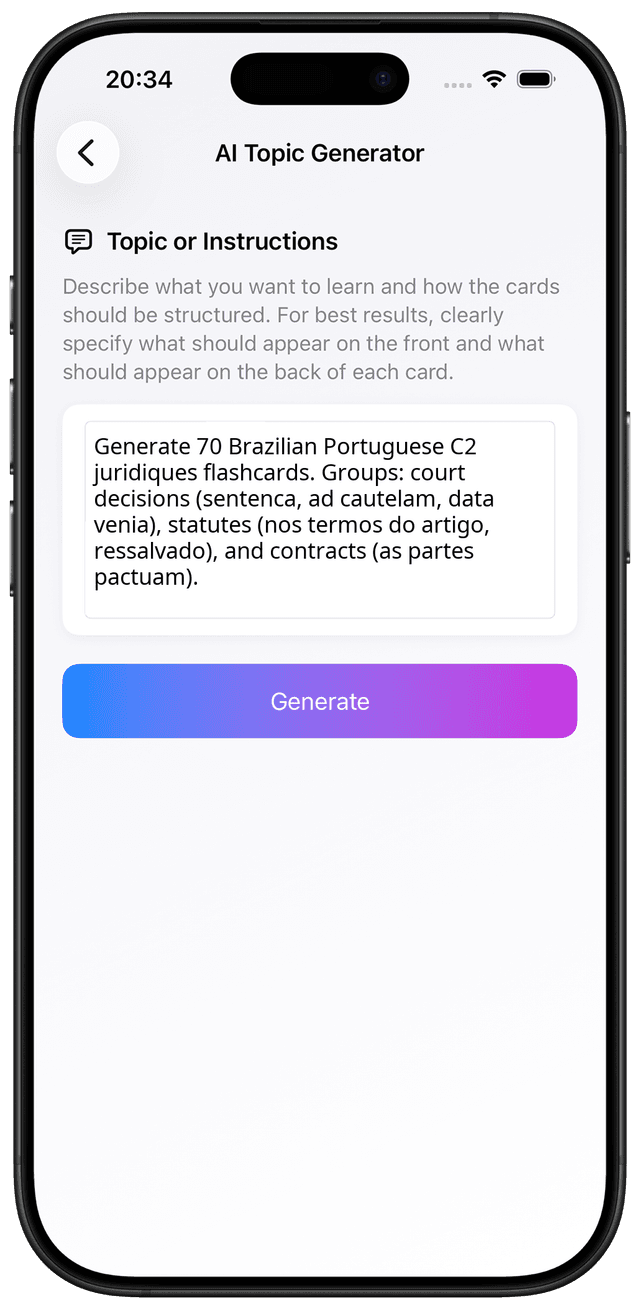
Generate 70 Brazilian Portuguese C2 juridiquês and institutional vocabulary flashcards. Four groups: (1) Court decisions and procedure: o magistrado, a sentença, o autor, o réu, o relator, a turma, a câmara, conhecer do recurso, dar provimento, negar provimento, denegar a ordem, em sede de cautelar, ad cautelam, data venia, in dubio pro reo, ex officio. (2) Statutes and regulations: nos termos do artigo, em conformidade com, sob pena de, ressalvado o disposto, salvo melhor juízo, a contar da publicação, ad referendum, hodiernamente. (3) Contracts and cartório Portuguese: as partes pactuam, em razão do presente instrumento, o outorgante, o outorgado, sob as penas da lei, dou fé, lavra-se o presente termo. (4) Public administration and STF style: o impetrante, o impetrado, a liminar, o agravo, recurso extraordinário, modulação de efeitos, repercussão geral. Front: term or phrase plus document context. Back: English equivalent plus document type plus register note.
CELPE-Bras Avançado Superior written production expects editorial-quality Brazilian Portuguese. That means deliberate rhetorical figures rather than flourishes. Antítese to sharpen a contrast. Anáfora to build rhythm. Pergunta retórica to shift the reader. Gradação to escalate. Litote to understate. In Brazilian opinion writing, columns by Eliane Brum, Luiz Fernando Verissimo, or Eliane Cantanhêde, and serious academic prose, these figures are expected tools. Their absence is what marks a text as competent but not C2.
C1 writers can produce a clean essay without rhetorical figures. C2 writers cannot. The absence itself reads as foreign once you are in this register. Brazilian assessors are reading for stylistic control as a separate criterion from grammar and lexical range.
Why this matters: CELPE-Bras Avançado Superior writing rubrics list stylistic control as an explicit scoring dimension. A grammatically perfect essay without rhetorical shape will not reach C2.
The strategy: Cards cover the rhetorical figures most common in Brazilian editorial and academic writing, each shown in a real example from a Brazilian newspaper, magazine, or essay, plus a note on when the figure strengthens an argument and when it tips into overreach.
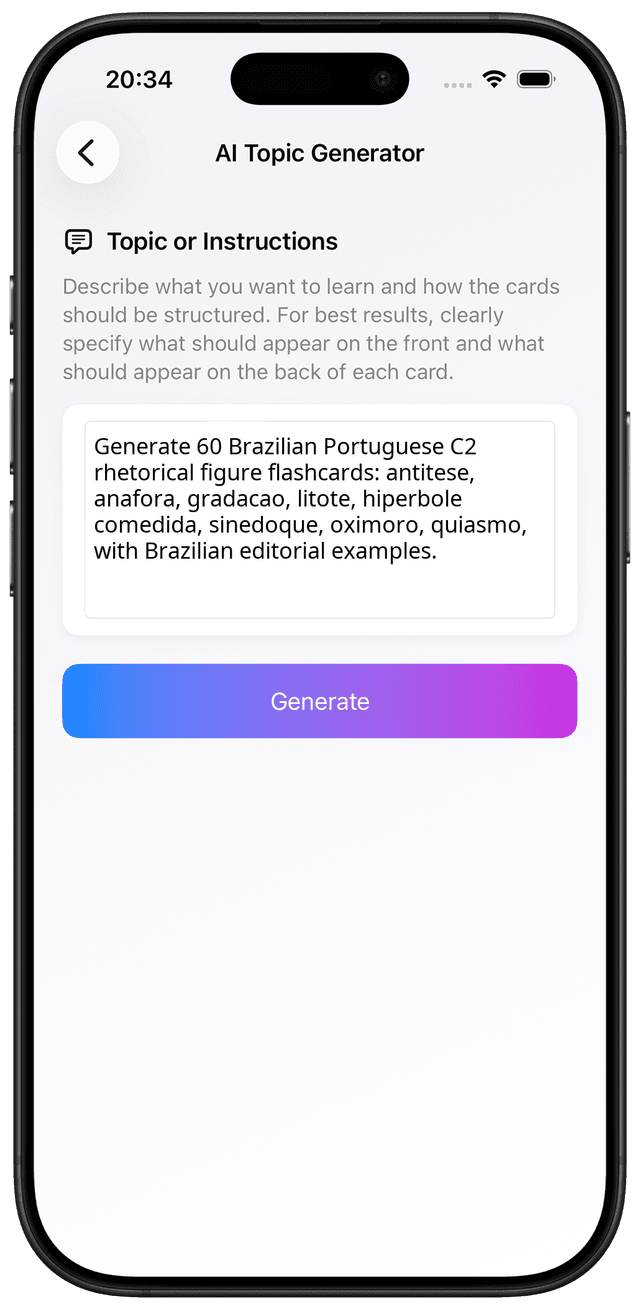
Generate 60 Brazilian Portuguese C2 rhetorical figure and stylistic flashcards. Four groups: (1) Classical figures in Brazilian use: a antítese, a anáfora, a gradação, a anticlímax, a litote, a hipérbole comedida, a sinédoque, o oxímoro, o quiasmo, a perífrase, a aliteração. (2) Editorial argument moves: se é verdade que ... não menos verdade é que, cumpre todavia ressaltar que, é justamente aí que se joga, o que está em jogo é, seria ingênuo supor que, não se trata tanto de ... quanto de. (3) Register-elevating constructions: cumpre indagar, não é fortuito que, vale a pena deter-se em, em rigor, a bem da verdade, em última instância. (4) Concessão e persuasão: até o observador mais cauteloso há de admitir que, nenhuma análise honesta poderia desconsiderar que, convém reconhecer que. Front: figure or phrase plus Brazilian editorial example from Folha, Estadão, Piauí, or Globo. Back: English explanation plus rhetorical label plus usage note.
Brazilian academic Portuguese has its own conventions. The CELPE-Bras Avançado Superior written tasks expect you to handle academic register: framing a research question, presenting evidence, qualifying claims, and concluding with measured force. The vocabulary for this work is largely separate from journalistic Brazilian Portuguese, even though both are formal.
Brazilian scholarly writing uses verbs like postular, hipotetizar, corroborar, refutar, problematizar, contextualizar, ressignificar, and tensionar. It uses nominalised academic structures: a análise, a discussão, o referencial teórico, a fundamentação, a confutação. It uses hedging constructions: parece haver, é possível sustentar, não é possível afirmar com certeza, cumpre cautela ao concluir. These are the moves Brazilian scholarly readers expect, and they appear constantly in CAPES journals and in serious dissertation work.
The goal: Give you the vocabulary and constructions that Brazilian academic Portuguese uses by default. This is what separates a C2 ensaio from a long C1 essay.
The strategy: Cards are grouped by the move they perform: framing, evidence, qualification, refutation, conclusion. Each card includes a sample sentence as it would appear in a Brazilian academic article from CAPES journals or a thesis defence.
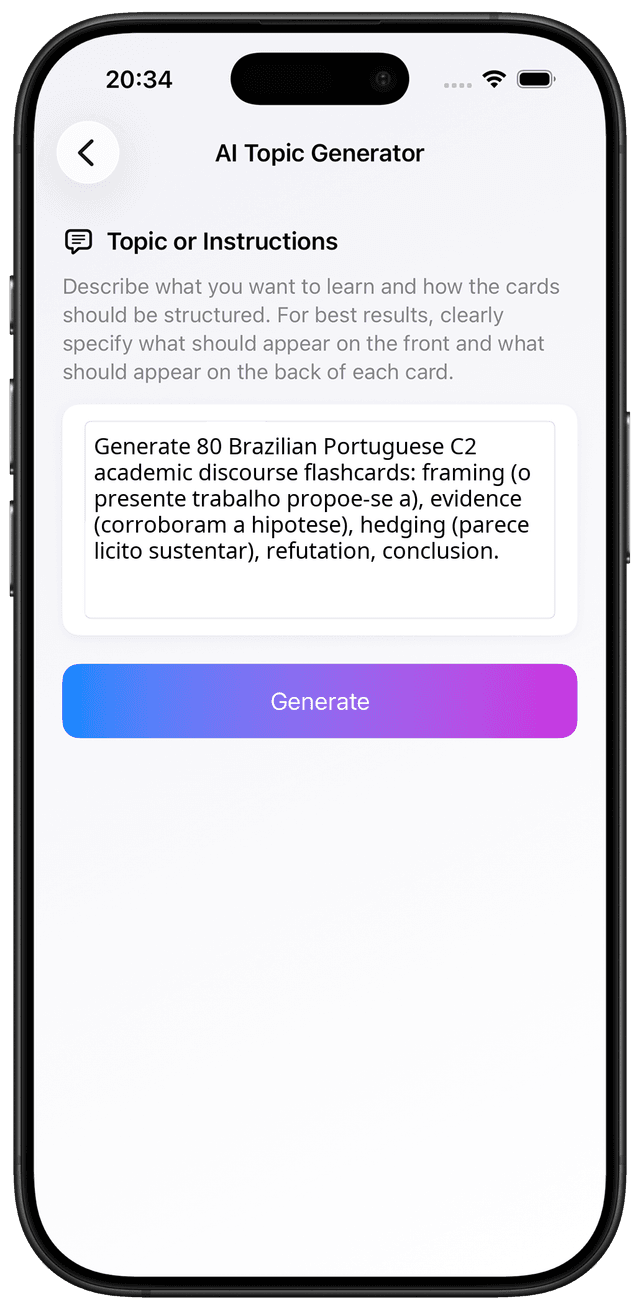
Generate 80 Brazilian Portuguese C2 academic discourse flashcards. Five groups: (1) Framing and posing the question: o presente trabalho propõe-se a, cumpre inicialmente situar, a questão central que se coloca é, no escopo da presente análise, é oportuno destacar que. (2) Presenting evidence: os dados colhidos corroboram a hipótese de que, as evidências empíricas sustentam que, observou-se em diversos estudos que, em conformidade com a literatura precedente. (3) Qualification and hedging: parece lícito sustentar que, cumpre cautela ao concluir, não se pode afirmar com plena certeza que, uma leitura mais atenta sugere que. (4) Refutation: tal interpretação não resiste a exame mais detido, cumpre refutar a tese segundo a qual, trata-se de leitura desmentida pelos dados. (5) Conclusion: à luz do exposto, em última análise, é lícito concluir que, as evidências convergem no sentido de sustentar. Front: phrase plus academic context from a Brazilian thesis or CAPES article. Back: English equivalent plus rhetorical function.
Brazilian cultural references run deep and surface often. A Machado de Assis line shows up in a Folha editorial. Drummond is quoted in political columns. Caetano Veloso and Chico Buarque turn up as moral shorthand in op-eds. Guimarães Rosa is invoked when someone wants to evoke the sertão. Native readers do not always catch every reference, but they catch the pattern. A phrase that lands a little differently is probably an allusion, and treating it as ordinary will misread the sentence.
C2 reading and listening tasks pull from this referential layer. A line from Drummond repurposed in a column on Brazilian politics is meant to do work. Recognising the source, or at least recognising that there is a source, is part of the comprehension. This is also why C2 Brazilian Portuguese feels culturally dense in a way C1 does not, and why MPB lyrics from Chico, Caetano, Gil, and Belchior carry the weight of a shared text in Brazilian public conversation.
The C2 milestone: Once you recognise the high-frequency literary and musical references that Brazilian writers reach for, the cultural depth of CELPE-Bras Avançado Superior texts becomes accessible. You are not reading the source works for fun. You are recognising the way Brazilian public discourse layers them in.
The strategy: Cards cover the highest-frequency references from the Brazilian canon. Machado phrases that survive in everyday writing, Drummond lines that function as cultural shorthand, Guimarães Rosa expressions from Grande Sertão, key Clarice Lispector phrasings, and MPB lyrics from Chico Buarque, Caetano Veloso, Gilberto Gil, and Belchior that Brazilians quote without attribution.
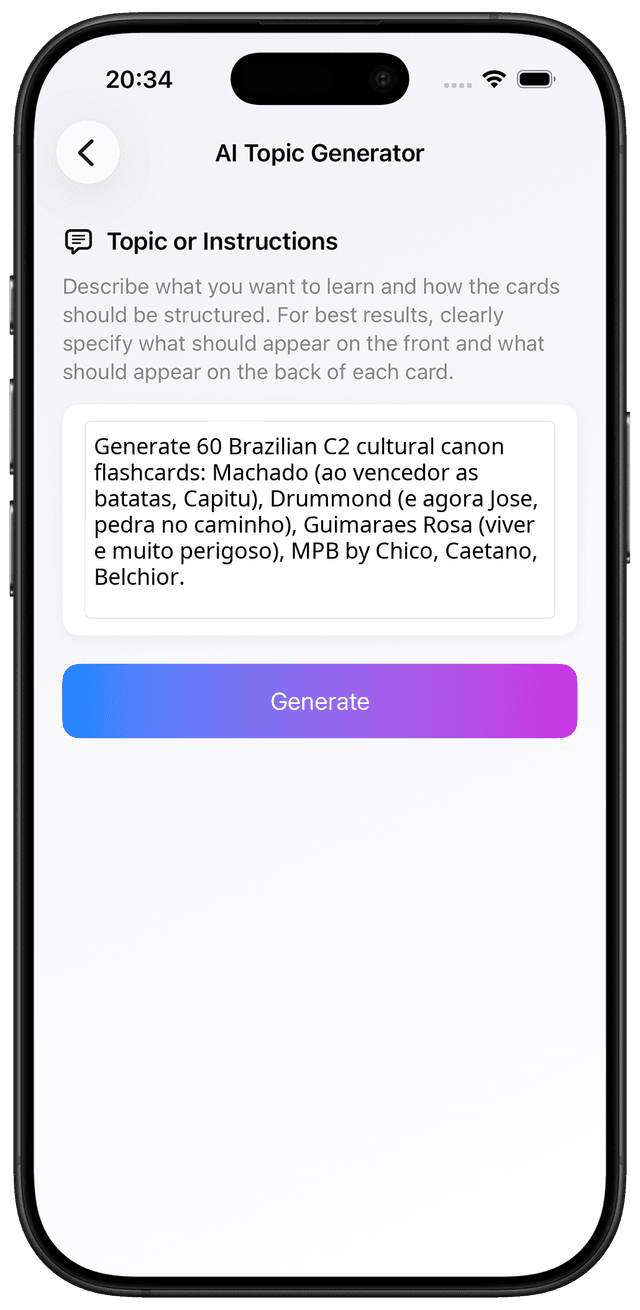
Generate 60 Brazilian Portuguese C2 cultural canon flashcards. Four groups: (1) Machado de Assis phrases alive in modern Brazil: ao vencedor as batatas, defunto autor, a Capitu olhar oblíquo e dissimulado, viver é alargar a alma. (2) Drummond, Bandeira, and modernismo: e agora José, tinha uma pedra no meio do caminho, vou-me embora pra Pasárgada, antropofagia cultural, manifesto pau-brasil. (3) Sertão and Guimarães Rosa: viver é muito perigoso, o sertão é do tamanho do mundo, travessia, jagunço, vereda. (4) MPB references as cultural shorthand: cálice (Chico Buarque), construção, sabiá, alegria alegria (Caetano), apesar de você, palavra de honra (Belchior), tropicália, geleia geral. Front: phrase or reference plus context where a modern Brazilian writer might use it. Back: source plus cultural function plus how to recognise the allusion.
At C2 the vocabulary that still trips you up is lower in frequency and more bound to context than at any earlier level. Spaced repetition handles this directly. The literary terms, provérbios, and juridiquês phrases that keep slipping come back more often. The ones you have locked in quietly drop back. Your review time goes where it actually moves your Brazilian Portuguese forward.
C2 builds directly on C1. Use the links below to review the prerequisite level or return to the full Portuguese guide.
Copy any prompt from this guide into MindCards and your first C2 deck is ready in seconds. No account needed. The app is free on iOS.