
Spaced repetition explained
Spacing your reviews is one of the most effective things you can do for Korean vocabulary retention.
TOPIK I Level 2 vocabulary builds on what you learned for Level 1. The words stay everyday Korean, but passages get slightly longer and tasks ask for faster recognition.
A lot of people study Level 2 by grinding grammar without the vocabulary base to back it up. This guide flips that: get the words down first, then the grammar makes more sense.
MindCards uses spaced repetition and active recall so vocabulary sticks. Use the prompts below to build focused decks for each phase and work through them in order.
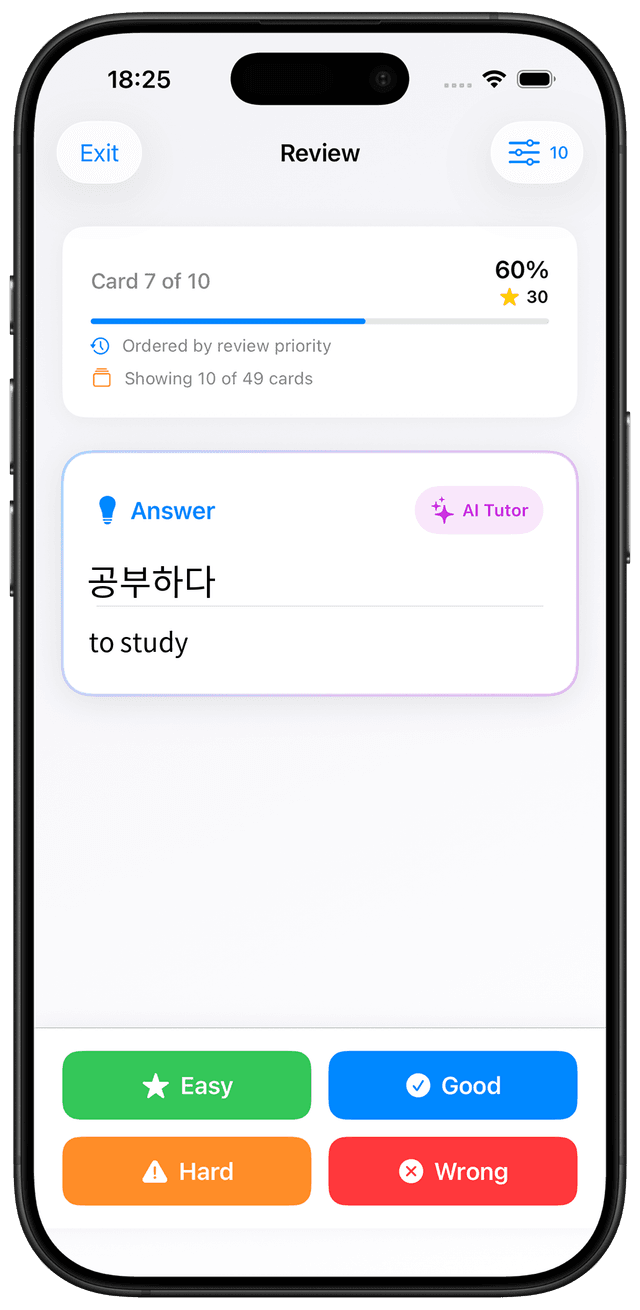
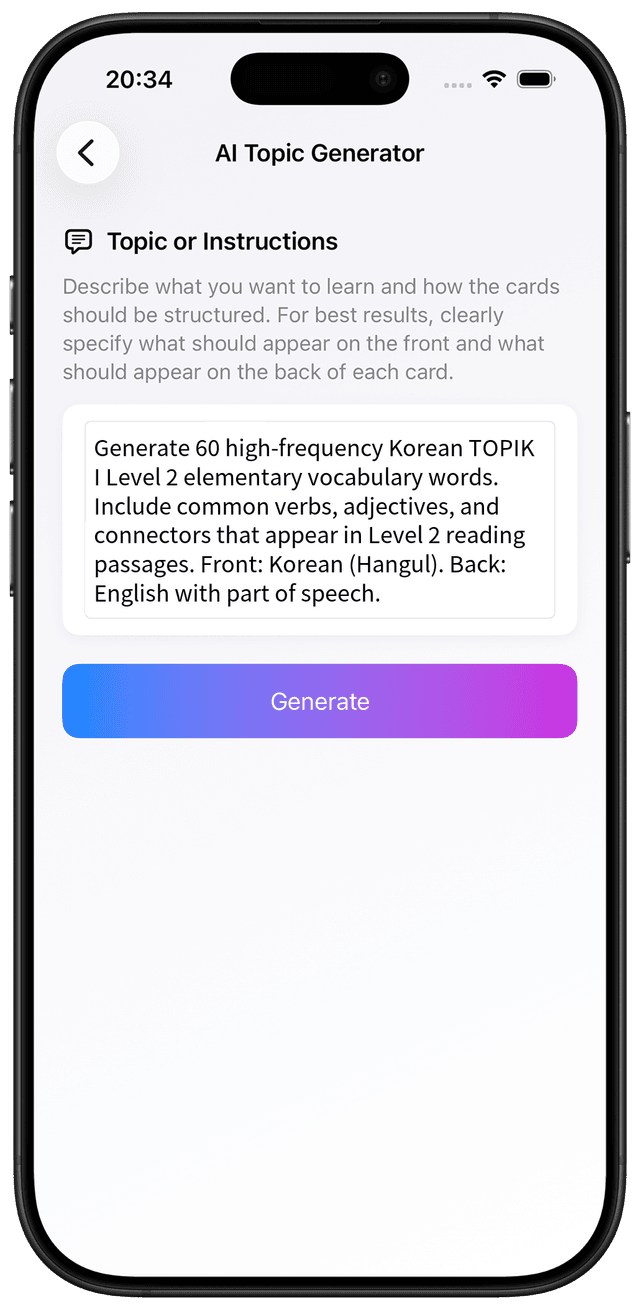
Start with the highest-frequency words that appear across TOPIK I Level 2 reading and listening sections. These expand beyond Level 1 basics with more verbs, common adjectives, and everyday connectors.
Why start here? Level 2 passages use slightly longer sentences than Level 1. Getting comfortable with these core words first makes the rest of the exam feel manageable.
The strategy: Focus on recognition before production. Read the Korean, recall the meaning, then work backward.
Generate 60 high-frequency Korean TOPIK I Level 2 elementary vocabulary words. Include common verbs, adjectives, and connectors that appear in Level 2 reading passages. Front: Korean (Hangul). Back: English with part of speech.
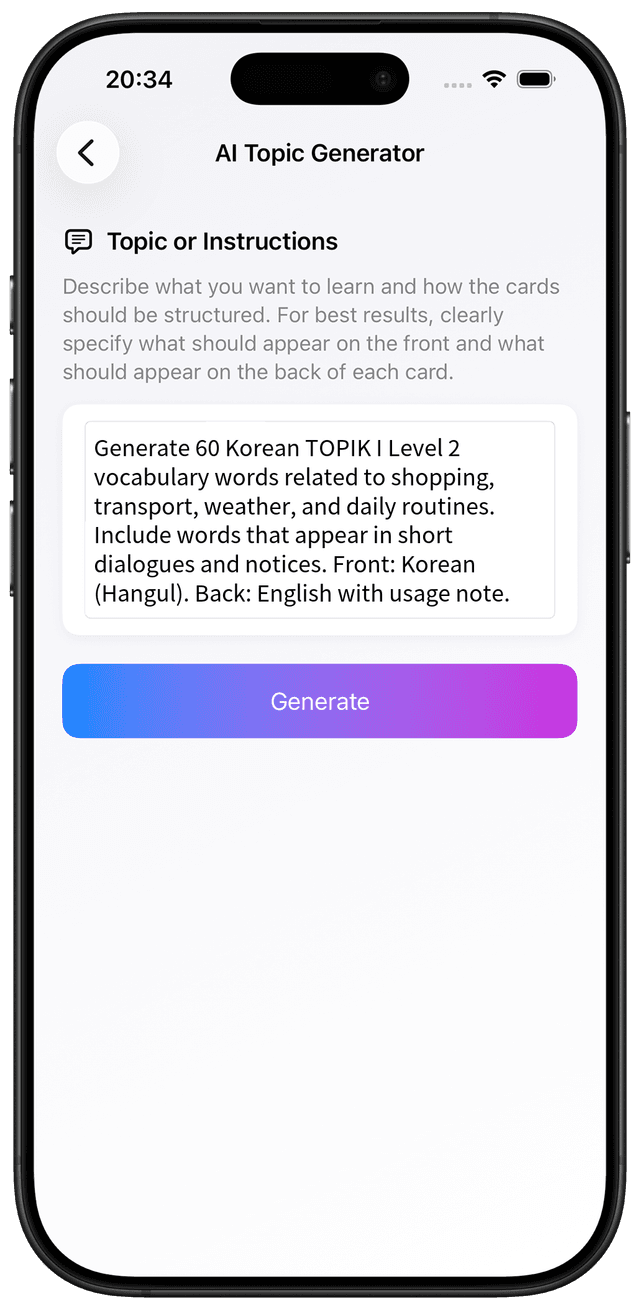
TOPIK I Level 2 reading and listening often cover shopping, transport, weather, and daily routines. This phase builds the topic-specific vocabulary you need to follow those dialogues and short texts.
Why this next? Level 2 tests your ability to understand practical Korean in real-life situations, not just isolated words.
The strategy: Group words by topic so you can activate related vocabulary during a listening or reading task.
Generate 60 Korean TOPIK I Level 2 vocabulary words related to shopping, transport, weather, and daily routines. Include words that appear in short dialogues and notices. Front: Korean (Hangul). Back: English with usage note.
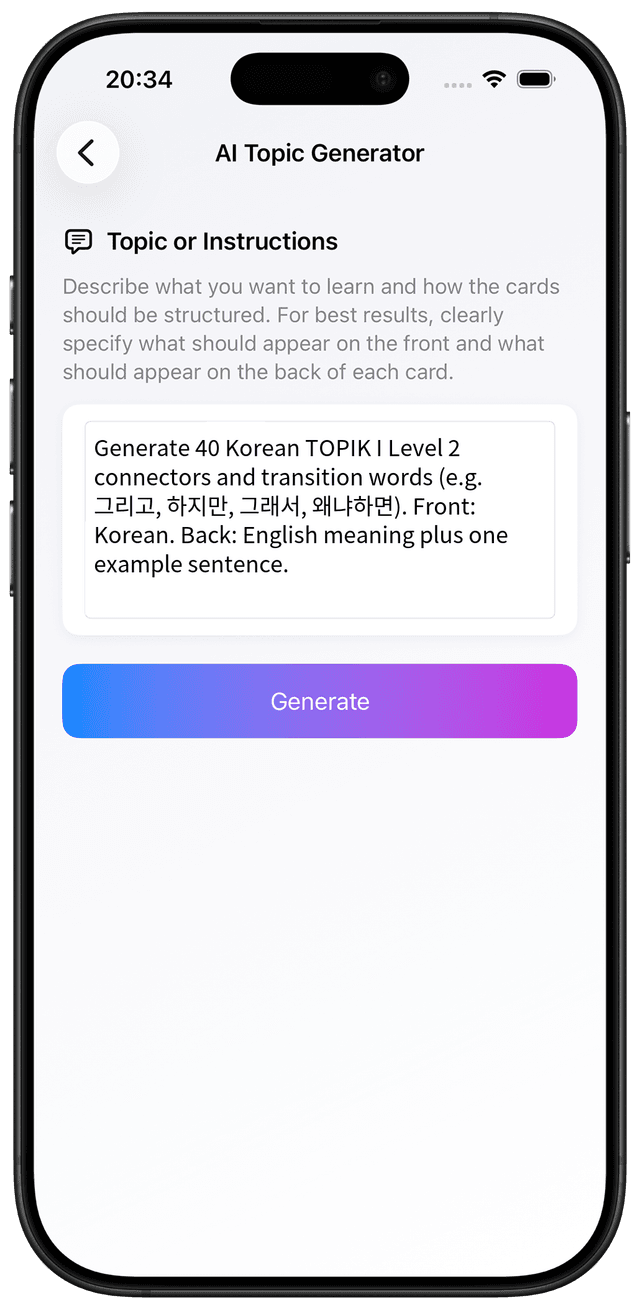
Level 2 passages link ideas with simple connectors like 'and', 'but', 'because', and 'so'. If you cannot track these, you lose the thread of short texts.
Why this matters: Many Level 2 questions test whether you understood the relationship between two ideas, not just isolated facts.
The strategy: Learn each connector with an example sentence showing real Level 2-style usage.
Generate 40 Korean TOPIK I Level 2 connectors and transition words (e.g. 그리고, 하지만, 그래서, 왜냐하면). Front: Korean. Back: English meaning plus one example sentence.
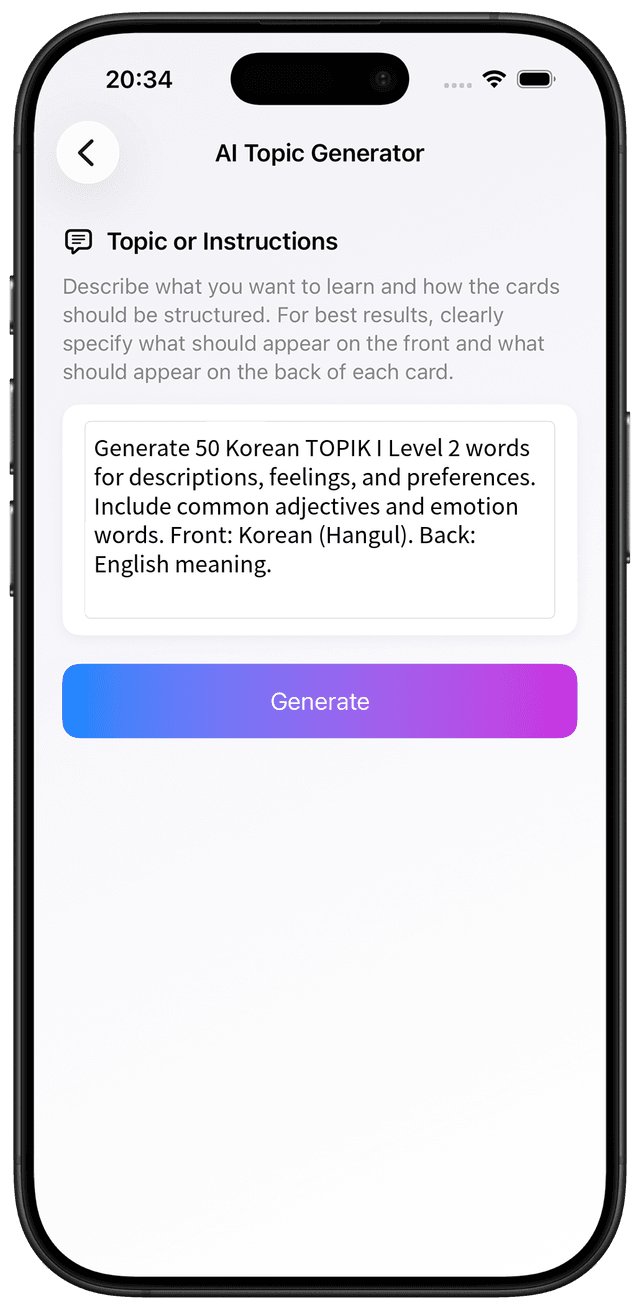
Level 2 tasks often ask you to understand how someone feels or describe a situation. This phase covers adjectives and phrases for emotions, preferences, and simple descriptions.
Why now? By this point you have a solid foundation. Adding descriptive vocabulary lets you handle more varied Level 2 questions.
Generate 50 Korean TOPIK I Level 2 words for descriptions, feelings, and preferences. Include common adjectives and emotion words. Front: Korean (Hangul). Back: English meaning.
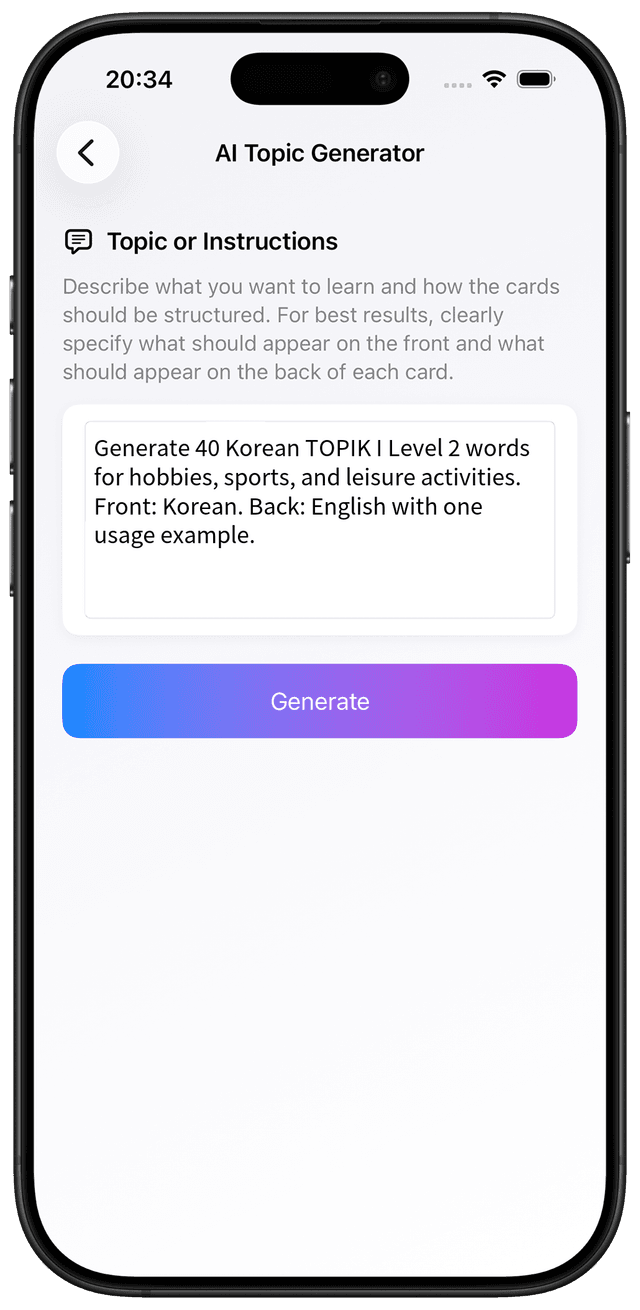
Hobbies, sports, and weekend activities come up often in Level 2. Learn the vocabulary for common pastimes so you can follow dialogues about what people do in their free time.
Goal: Recognize common activity words in context and understand short descriptions of hobbies and routines.
Generate 40 Korean TOPIK I Level 2 words for hobbies, sports, and leisure activities. Front: Korean. Back: English with one usage example.
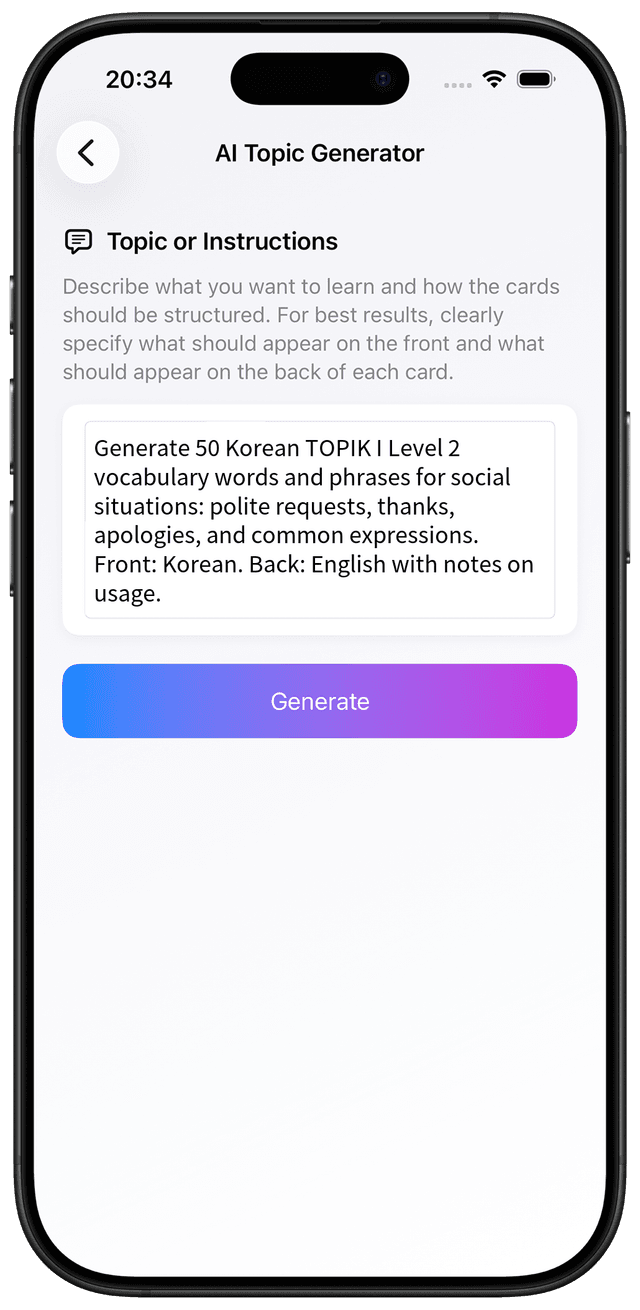
Level 2 includes dialogues in shops, restaurants, and social settings. This phase covers polite expressions, requests, and common social phrases.
Why now? These phrases appear in both listening and reading. Studying them improves performance across sections.
Generate 50 Korean TOPIK I Level 2 vocabulary words and phrases for social situations: polite requests, thanks, apologies, and common expressions. Front: Korean. Back: English with notes on usage.
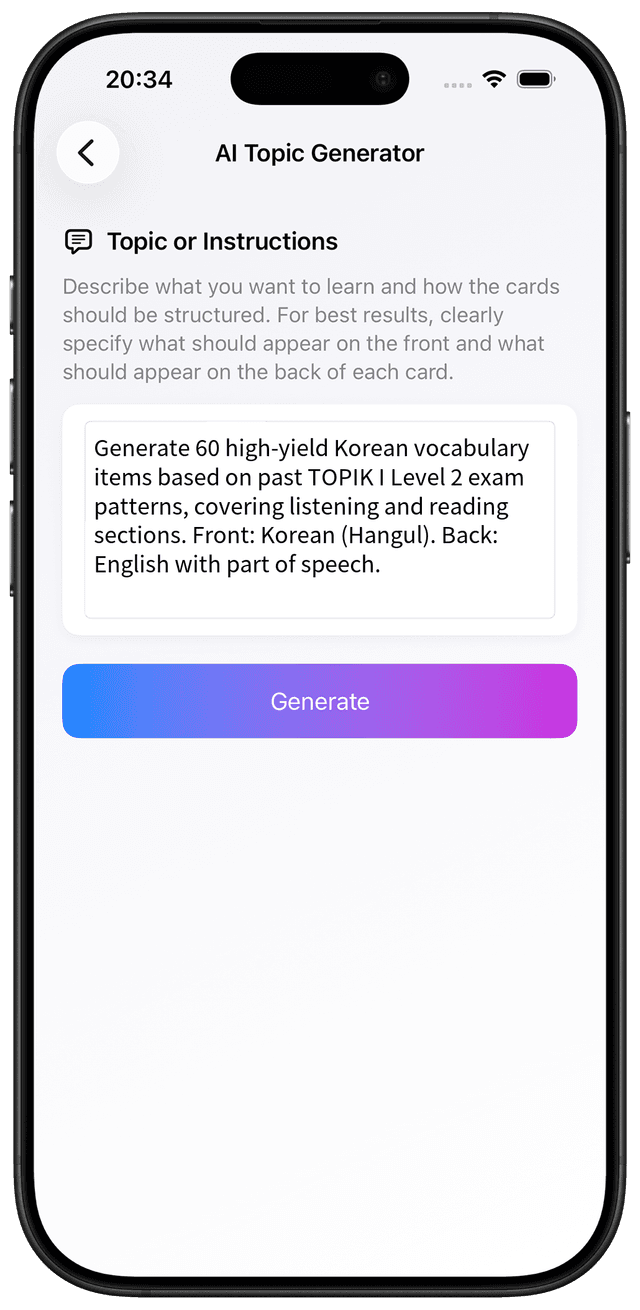
The final phase targets the vocabulary that comes up most frequently in past TOPIK I Level 2 exams, covering both listening and reading sections.
Milestone: After this phase, your vocabulary base covers the core of what Level 2 tests.
Generate 60 high-yield Korean vocabulary items based on past TOPIK I Level 2 exam patterns, covering listening and reading sections. Front: Korean (Hangul). Back: English with part of speech.
MindCards uses active recall and spaced repetition so Level 2 vocabulary moves from passive recognition to the fast retrieval you need in the exam room.
Keep your decks in daily rotation. Fifteen minutes a day adds up quickly.
Build practical Korean with smart flashcards, AI deck generation, and spaced repetition designed for long-term memory and TOPIK I Level 2 exam readiness.