
Spaced Repetition Explained
Learn why spacing reviews is key to mastering Hangul faster.
Hangul is the foundation of Korean literacy. Unlike many writing systems, it is highly structured and learnable in a short time when studied in the right order.
Many beginners stall because they memorize letter charts but never train syllable blocks, batchim, and real pronunciation patterns together. This guide fixes that with a practical sequence.
MindCards helps you retain each step with spaced repetition and active recall. Use the prompts below to build custom Hangul practice decks and start reading Korean confidently.
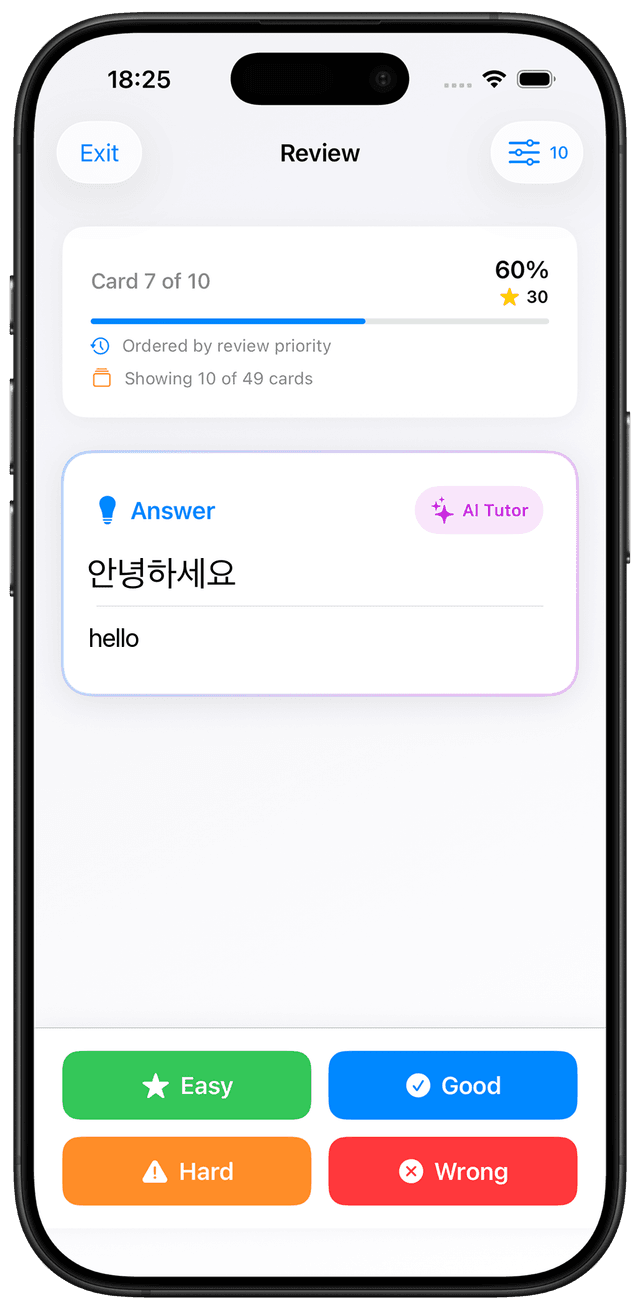
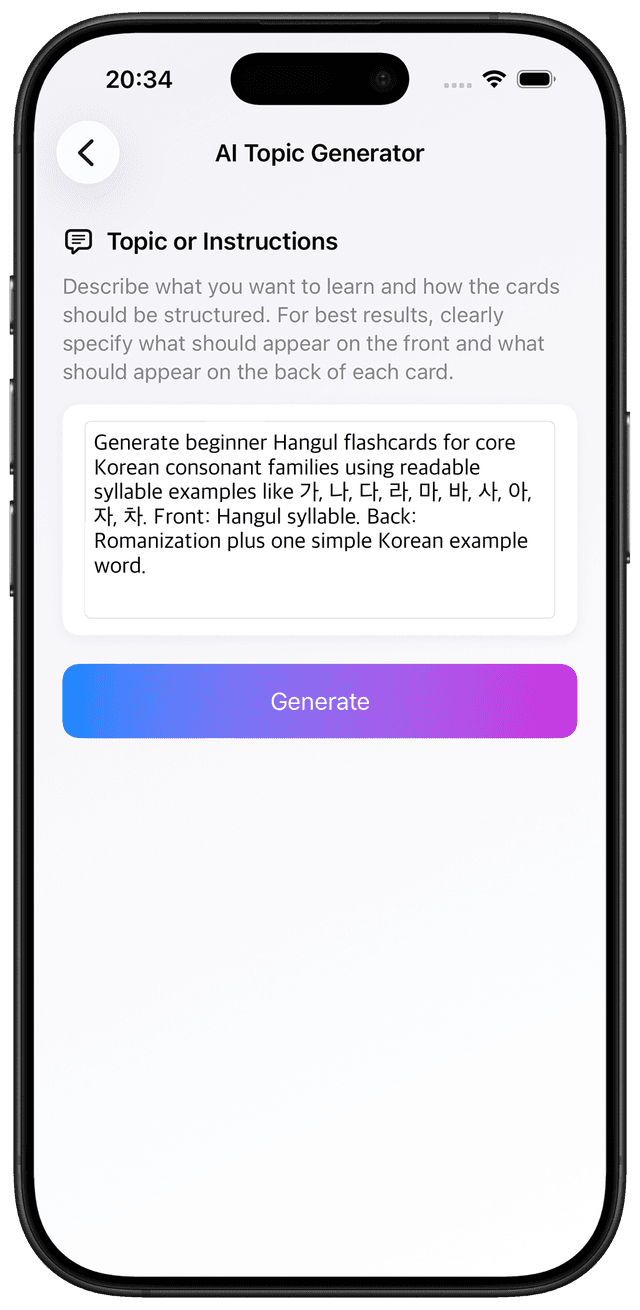
Start with the most frequent basic consonants in Hangul. These are the core shapes you need before reading full words.
Why start here? Consonants appear in every syllable block, so early mastery gives fast reading progress.
The Strategy: Practice recognition and sound mapping together instead of memorizing symbols in isolation.
Generate beginner Hangul flashcards for core Korean consonant families using readable syllable examples like 가, 나, 다, 라, 마, 바, 사, 아, 자, 차. Front: Hangul syllable. Back: Romanization plus one simple Korean example word.
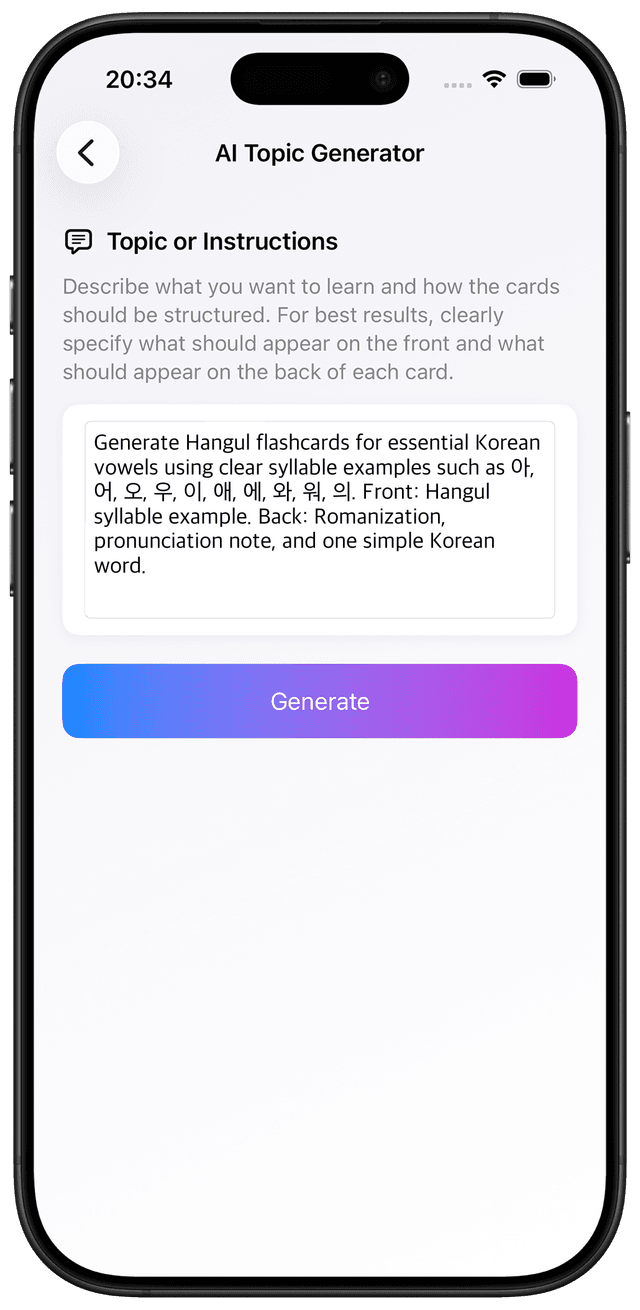
Add core vowels so you can start assembling real Korean syllables. Include simple and high-frequency compound vowels.
Why this next? Consonants become readable only when paired with vowels in block form.
The Strategy: Group similar vowel sounds to reduce confusion between close pairs.
Generate Hangul flashcards for essential Korean vowels using clear syllable examples such as 아, 어, 오, 우, 이, 애, 에, 와, 워, 의. Front: Hangul syllable example. Back: Romanization, pronunciation note, and one simple Korean word.
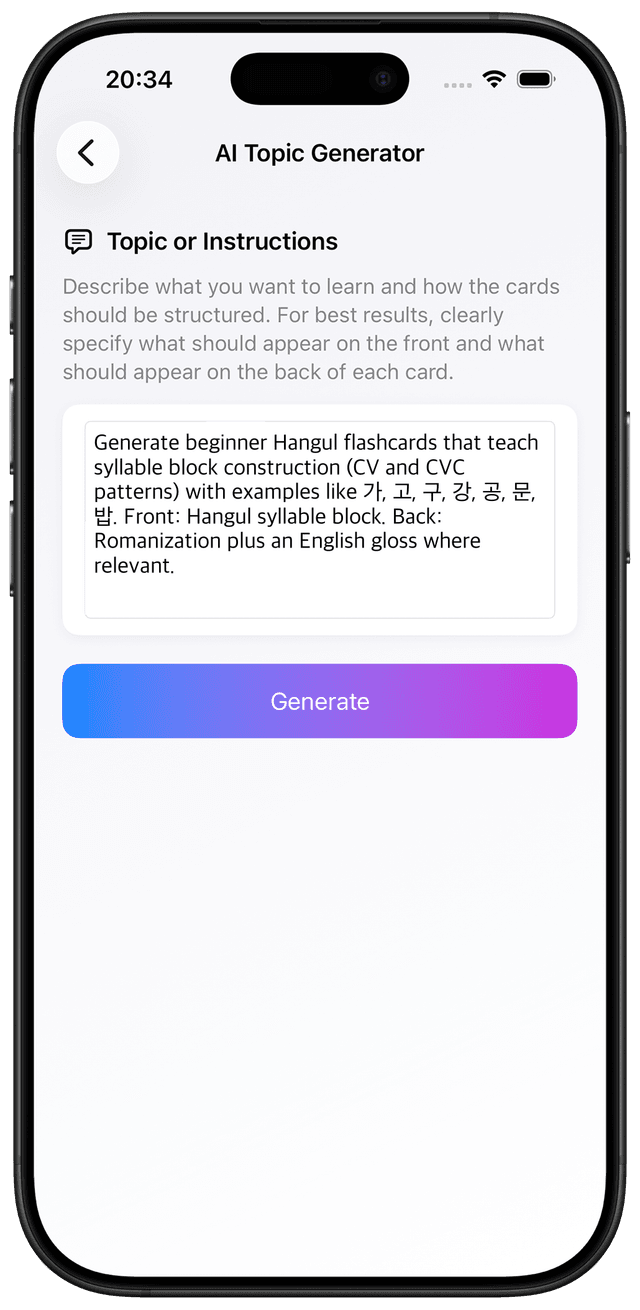
Learn how consonants and vowels combine into square syllable blocks. This is the key shift from alphabet study to actual reading.
Why this matters: Korean is read in syllable blocks, not individual letters in a row.
The Strategy: Train C+V and C+V+C patterns with many short examples.
Generate beginner Hangul flashcards that teach syllable block construction (CV and CVC patterns) with examples like 가, 고, 구, 강, 공, 문, 밥. Front: Hangul syllable block. Back: Romanization plus an English gloss where relevant.
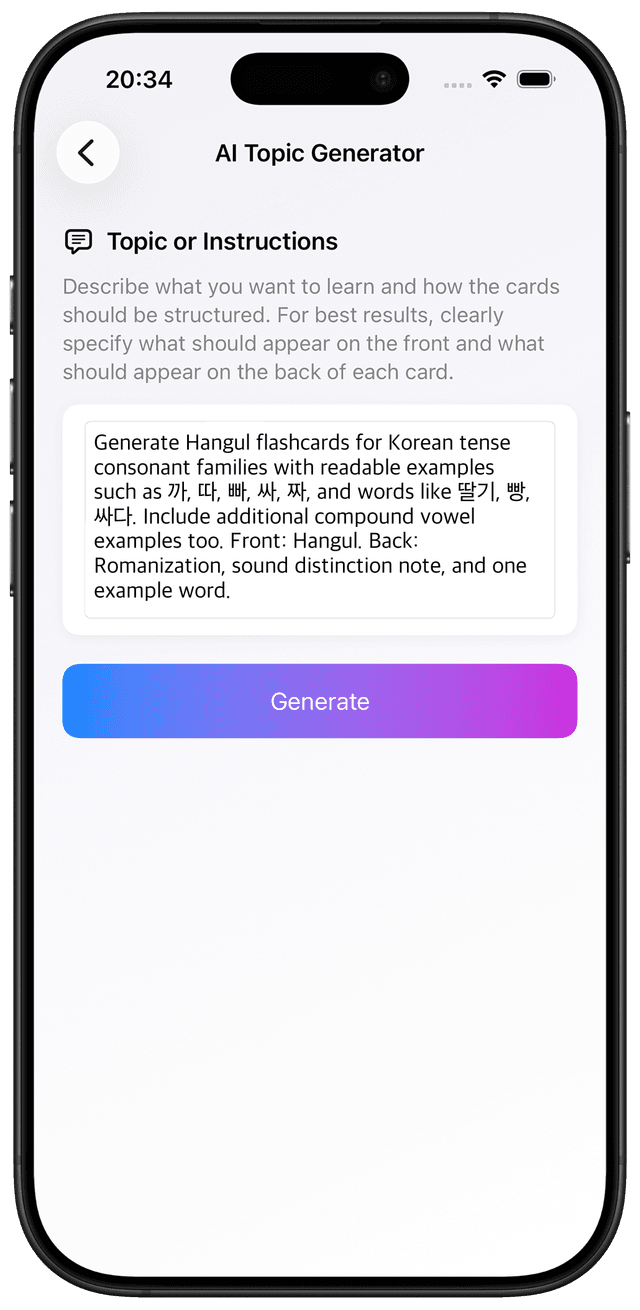
Expand to tense consonants and less common vowel combinations that appear in frequent everyday words.
Why this is vital: These sounds change meaning, and beginners often miss them in listening and reading.
Generate Hangul flashcards for Korean tense consonant families with readable examples such as 까, 따, 빠, 싸, 짜, and words like 딸기, 빵, 싸다. Include additional compound vowel examples too. Front: Hangul. Back: Romanization, sound distinction note, and one example word.
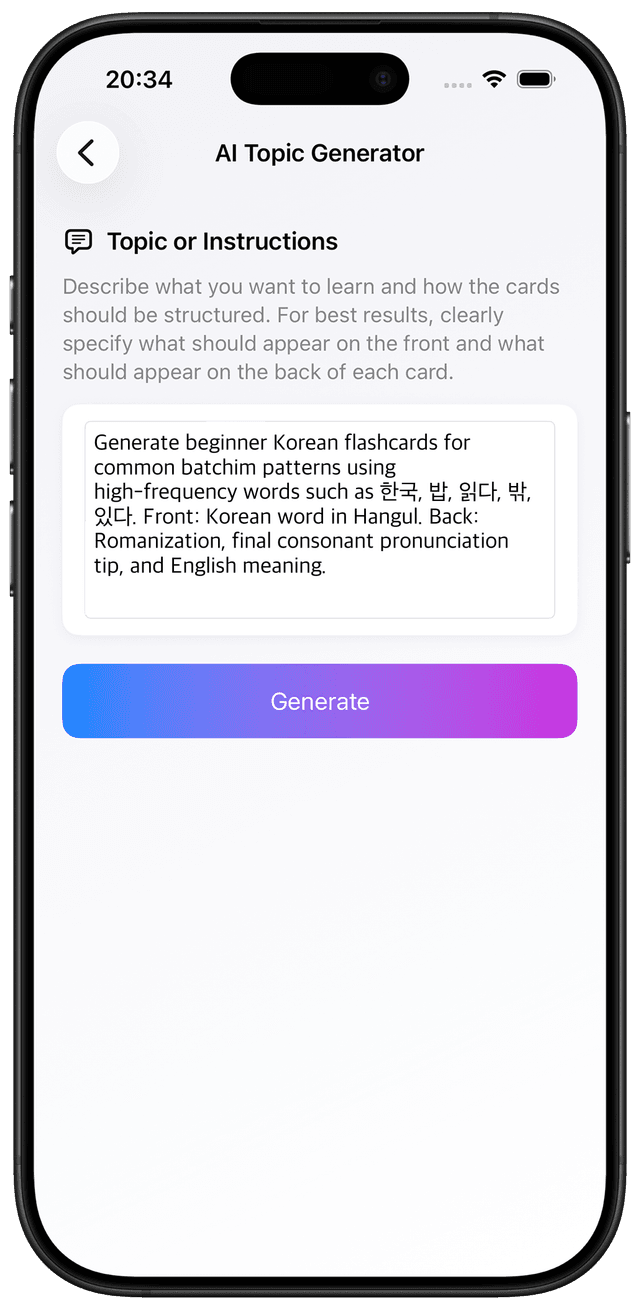
Master batchim rules so word endings become predictable and your pronunciation improves significantly.
Goal: Recognize final consonant sounds quickly in beginner vocabulary and short sentences.
Generate beginner Korean flashcards for common batchim patterns using high-frequency words such as 한국, 밥, 읽다, 밖, 있다. Front: Korean word in Hangul. Back: Romanization, final consonant pronunciation tip, and English meaning.
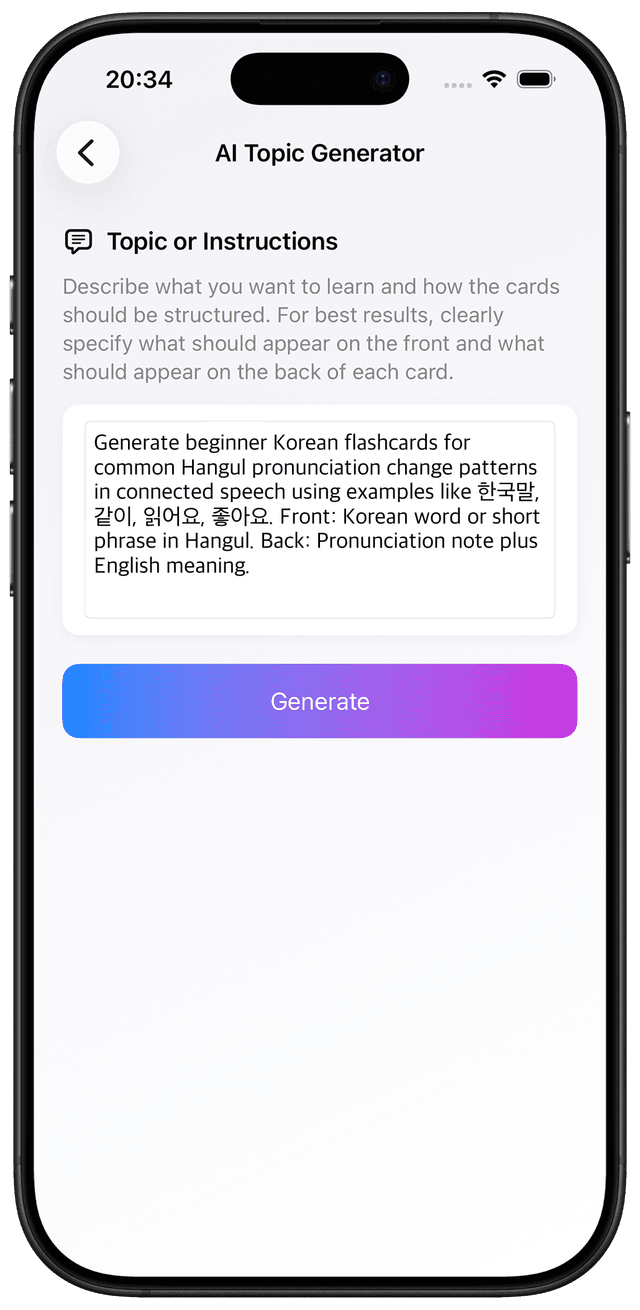
Learn high-impact pronunciation changes (like liaison and simplifications) that appear in normal spoken Korean.
Why now? This helps you connect textbook spelling to what you actually hear in conversations.
Generate beginner Korean flashcards for common Hangul pronunciation change patterns in connected speech using examples like 한국말, 같이, 읽어요, 좋아요. Front: Korean word or short phrase in Hangul. Back: Pronunciation note plus English meaning.
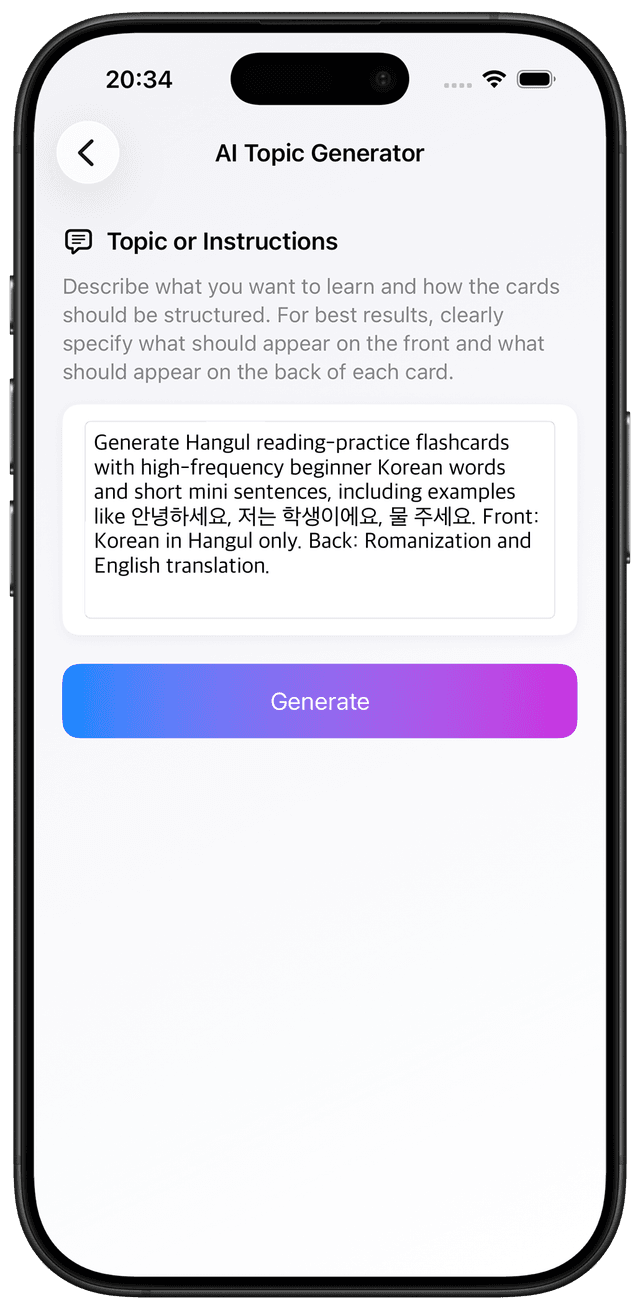
Finish with high-frequency beginner words and short Korean sentences to build true reading momentum.
Milestone: At this stage, you can decode most beginner Hangul text and transition into TOPIK 1 vocabulary study.
Generate Hangul reading-practice flashcards with high-frequency beginner Korean words and short mini sentences, including examples like 안녕하세요, 저는 학생이에요, 물 주세요. Front: Korean in Hangul only. Back: Romanization and English translation.
MindCards uses active recall and spaced repetition to help you move Hangul from recognition to fluent reading.
Great. Continue with the structured TOPIK 1 vocabulary path to apply your reading skills in real exam-ready words.
Learn Korean with smart flashcards, AI-generated decks, and spaced repetition designed for long-term memory and practical fluency.