
Spaced Repetition Explained
Learn why spacing reviews is key to mastering Dutch A1 vocabulary.
Dutch A1 vocabulary is your launchpad into real conversation. These core words and phrases appear in greetings, shopping, transport, and introductions - the same contexts used in beginner inburgering communication tasks.
Many learners plateau because they memorize random lists without mastering de/het usage, verb-second order, and high-frequency phrase chunks. This guide gives you a practical sequence so each study session builds usable Dutch for real-life tasks.
MindCards helps you retain vocabulary with spaced repetition and active recall. Use the prompts below to generate focused decks for daily Dutch situations, not generic word dumps.
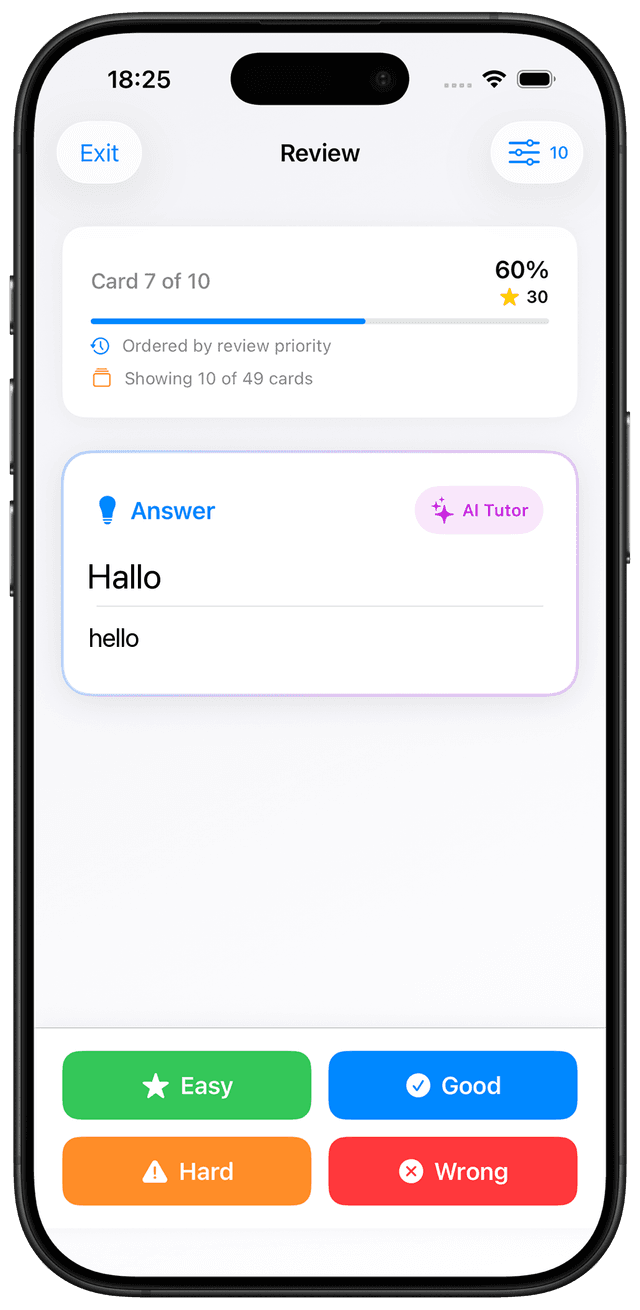
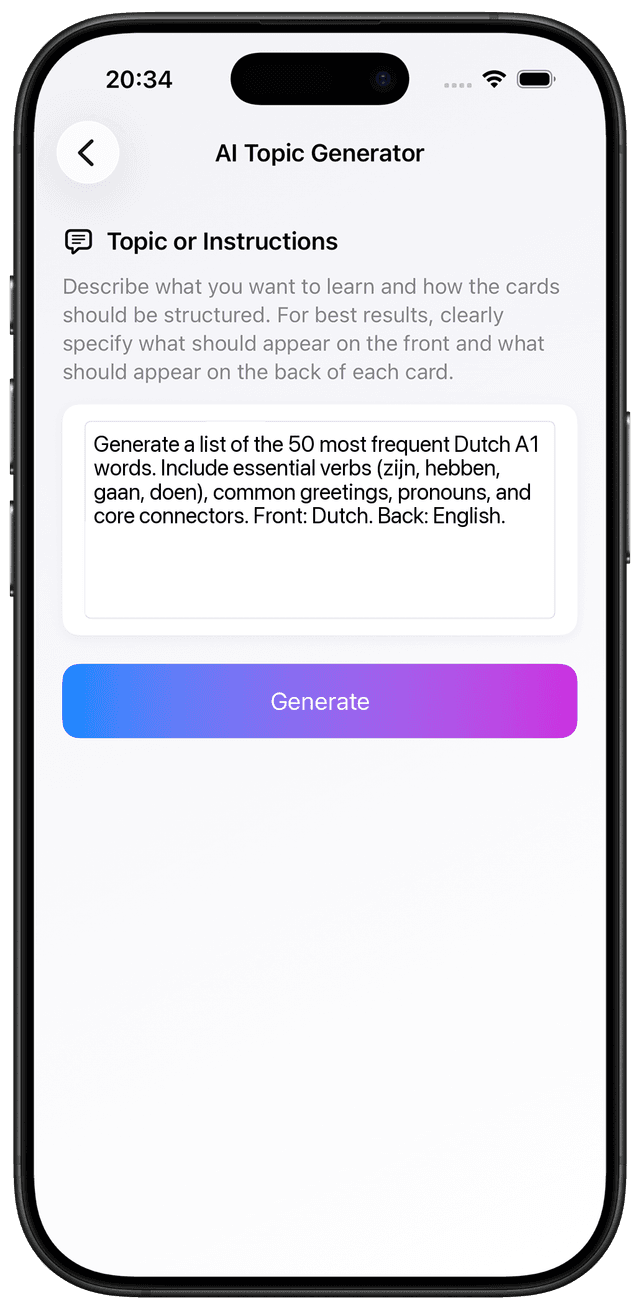
Start with high-frequency verbs, greetings, pronouns, and everyday connectors. In Dutch, this gives you the base for direct, practical communication.
Why start here? You quickly recognize sentence frames with verb-second order and frequent verbs like zijn, hebben, gaan, and doen.
The Strategy: Build cards that combine a core verb with a short everyday phrase, not isolated words.
Generate a list of the 50 most frequent Dutch A1 words. Include essential verbs (zijn, hebben, gaan, doen), common greetings, pronouns, and core connectors. Front: Dutch. Back: English.
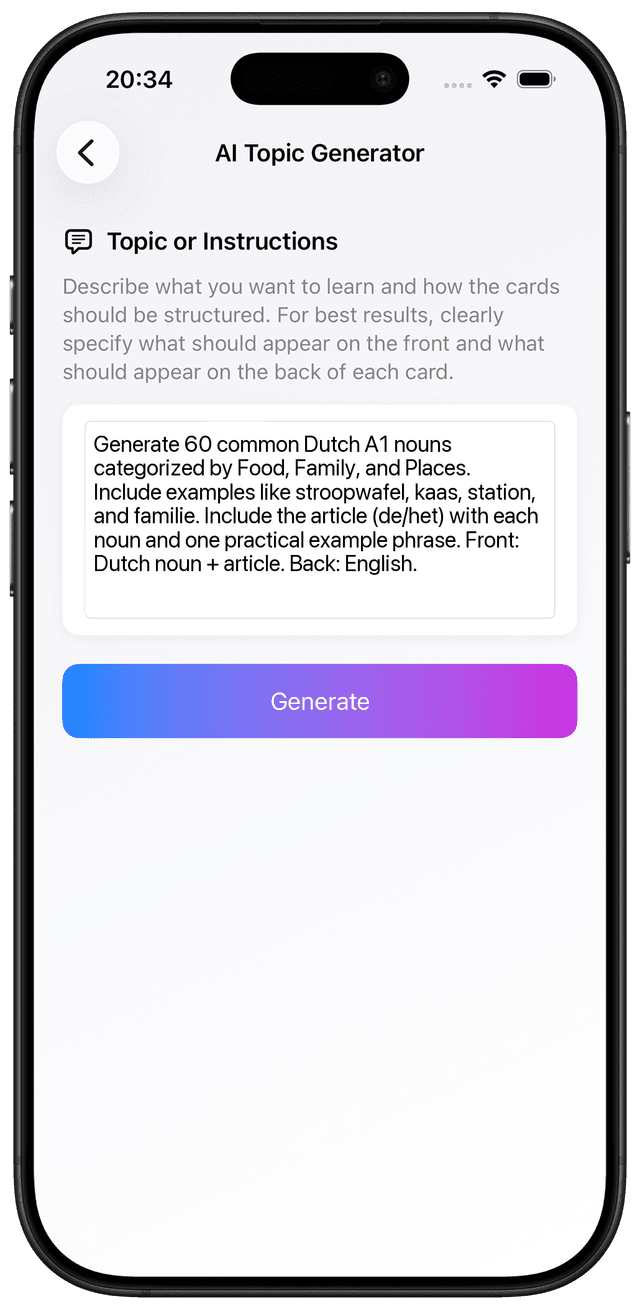
Expand into survival nouns for food, family, places, and daily objects. This is where Dutch becomes practical for errands, cafes, and city navigation in the Netherlands and Belgium.
Why this next? You cannot describe daily life without these nouns, and de/het accuracy matters early in Dutch.
The Strategy: Learn nouns with de/het and plural forms together so recall transfers faster into speech.
Generate 60 common Dutch A1 nouns categorized by Food, Family, and Places. Include examples like stroopwafel, kaas, station, and familie. Include the article (de/het), plural form, and one practical example phrase. Front: Dutch noun + article. Back: English.
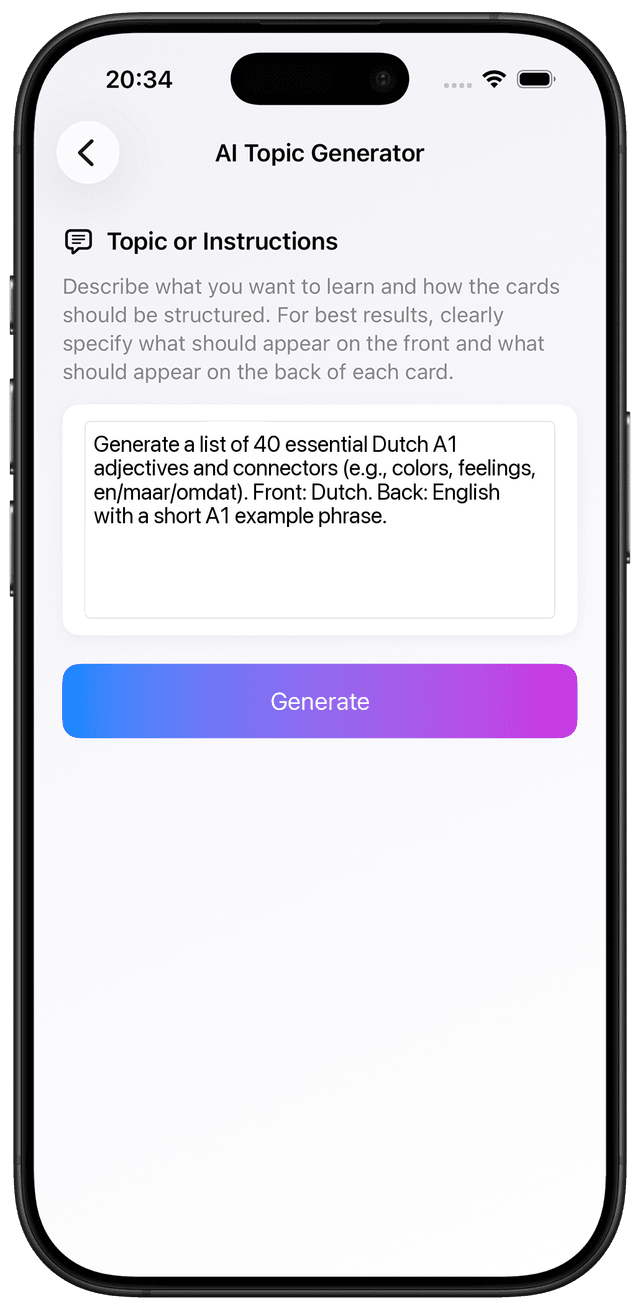
Add descriptive words and connectors to move from isolated words to useful Dutch sentences you can actually use in conversation.
Why this matters: Connectors like en, maar, and omdat help you move from fragments to full statements, and train Dutch clause order naturally.
The Strategy: Use mini-sentence cards that contrast short main clauses and omdat clauses.
Generate a list of 40 essential Dutch A1 adjectives and connectors (e.g., colors, feelings, en/maar/omdat). Include short examples that show basic Dutch word order. Front: Dutch. Back: English with a short A1 example phrase.
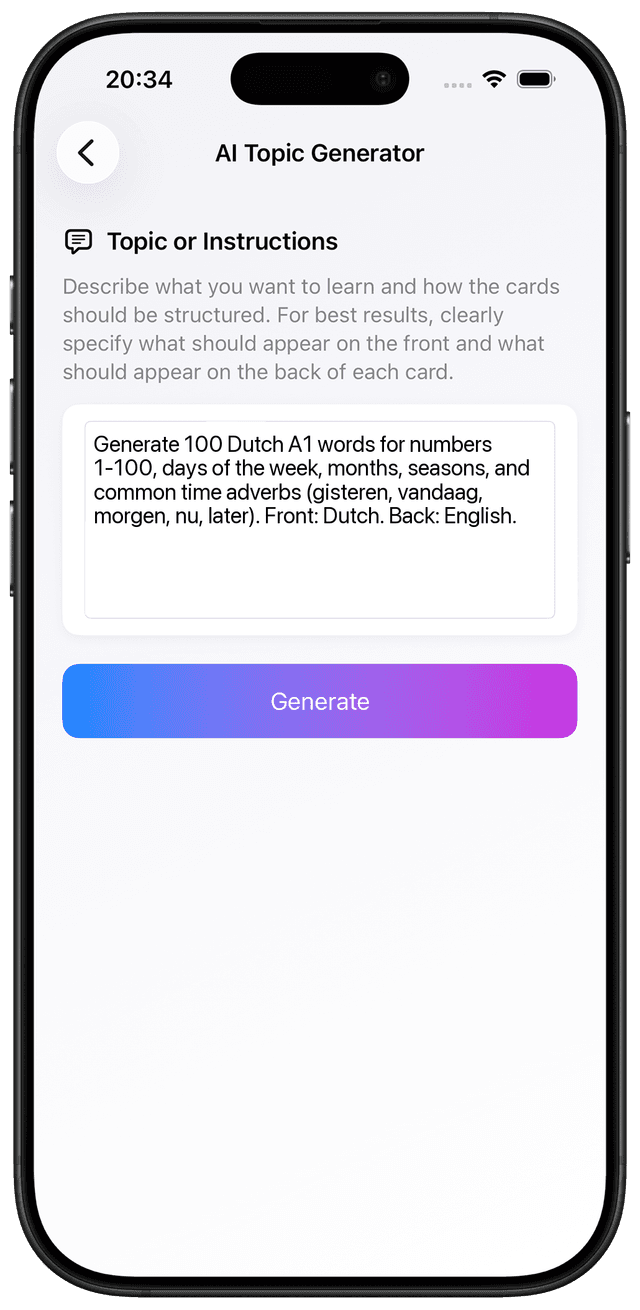
Learn numbers, weekdays, months, and common time expressions so you can schedule appointments and organize routines in Dutch.
Why this is vital: Time language appears constantly in transport, work, school, and administrative conversations.
Generate 100 Dutch A1 words for numbers 1-100, days of the week, months, seasons, and common time adverbs (gisteren, vandaag, morgen, nu, later). Front: Dutch. Back: English.
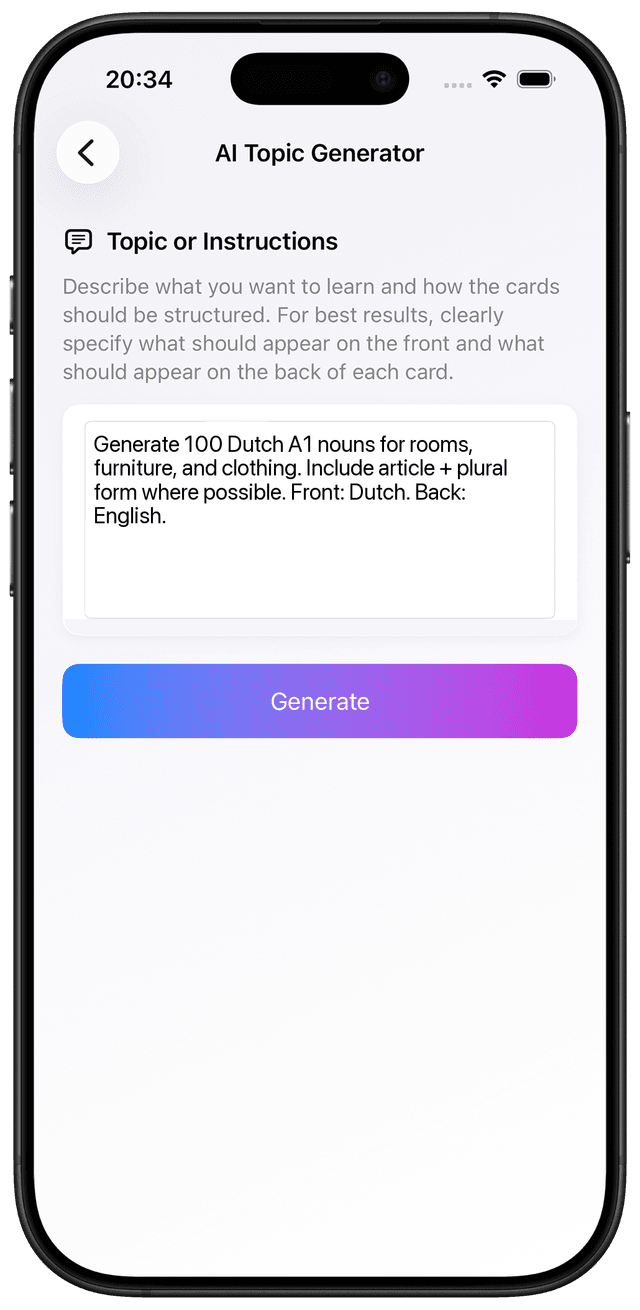
Learn vocabulary for rooms, furniture, clothing, and routines so you can describe your personal world clearly in Dutch.
Goal: Describe where things are, what you do each day, and what you need at home.
Generate 100 Dutch A1 nouns for rooms, furniture, and clothing. Include article + plural form where possible. Front: Dutch. Back: English.
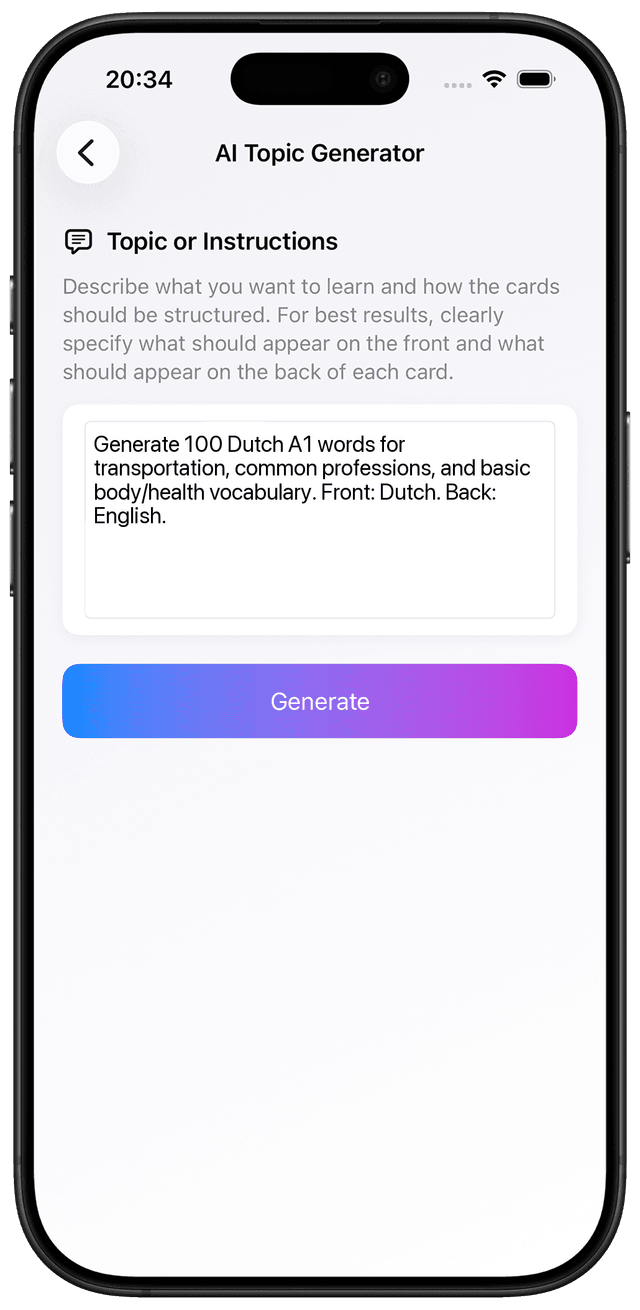
Cover essential vocabulary for transportation, jobs, and basic health topics to handle practical situations in Dutch-speaking environments, including municipal and service contexts.
Why now? This vocabulary helps immediately with stations, gemeente desks, workplaces, and pharmacies.
Generate 100 Dutch A1 words for transportation, common professions, and basic body/health vocabulary. Front: Dutch. Back: English.
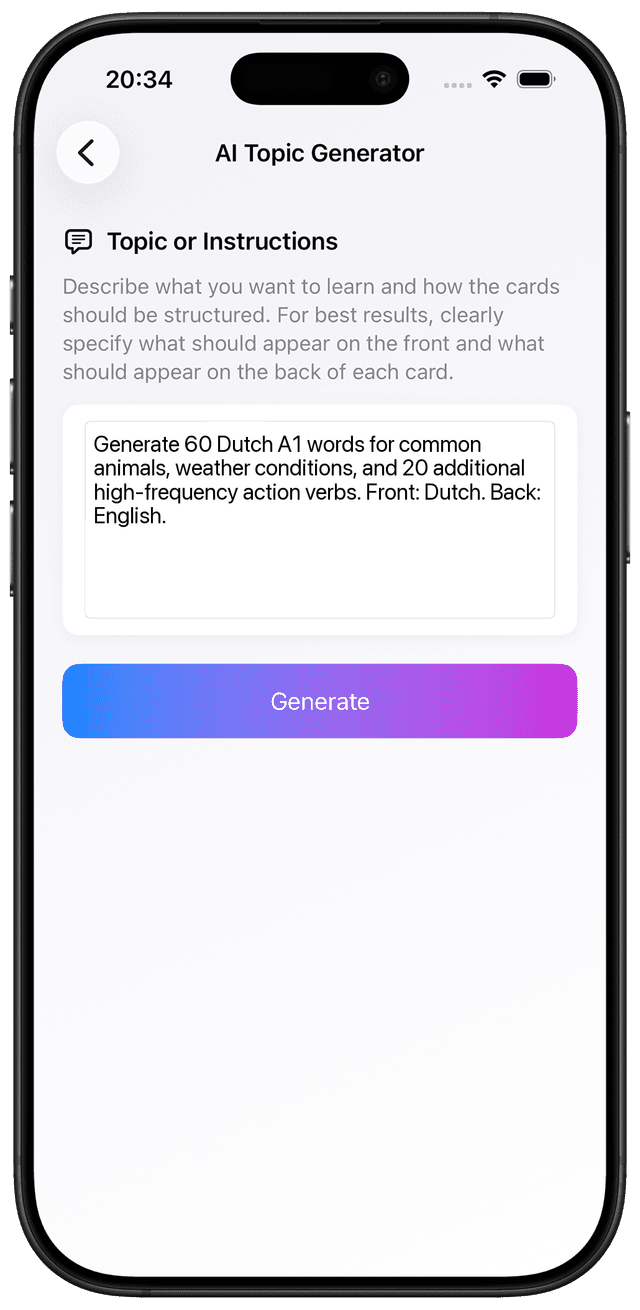
Finish your A1 base with frequent action verbs, weather, animals, and environment terms to round out your active Dutch vocabulary and listening range.
Milestone: At this stage, you can handle short practical Dutch conversations and understand more everyday announcements.
Generate 60 Dutch A1 words for common animals, weather conditions, and 20 additional high-frequency action verbs. Front: Dutch. Back: English.
MindCards uses retrieval practice and spacing to move Dutch words from passive recognition to active recall in speech and listening.
Keep this deck in daily rotation to strengthen de/het patterns, verb order, and practical conversation vocabulary. When you are ready, move on to A2.
Build practical Dutch for real life - from cafes to transport and municipal tasks - with smart flashcards, AI deck generation, and spaced repetition tuned for long-term retention.