
Spaced Repetition Explained
Learn why spacing reviews is key to mastering European Portuguese A1 vocabulary.
European Portuguese A1 vocabulary is your starting point for real conversations in Portugal. These core words and phrases cover greetings, cafes, transport, shopping, and introductions, the exact situations you hit on day one.
Many learners pick up Brazilian Portuguese first, then struggle to adapt when they arrive in Lisbon. European Portuguese sounds quite different, uses slightly different vocabulary, and has its own rhythm. This guide focuses on the variant spoken in Portugal from the start.
MindCards builds retention through spaced repetition and active recall. Use the prompts below to generate focused decks that match how Portuguese is actually spoken in Portugal.
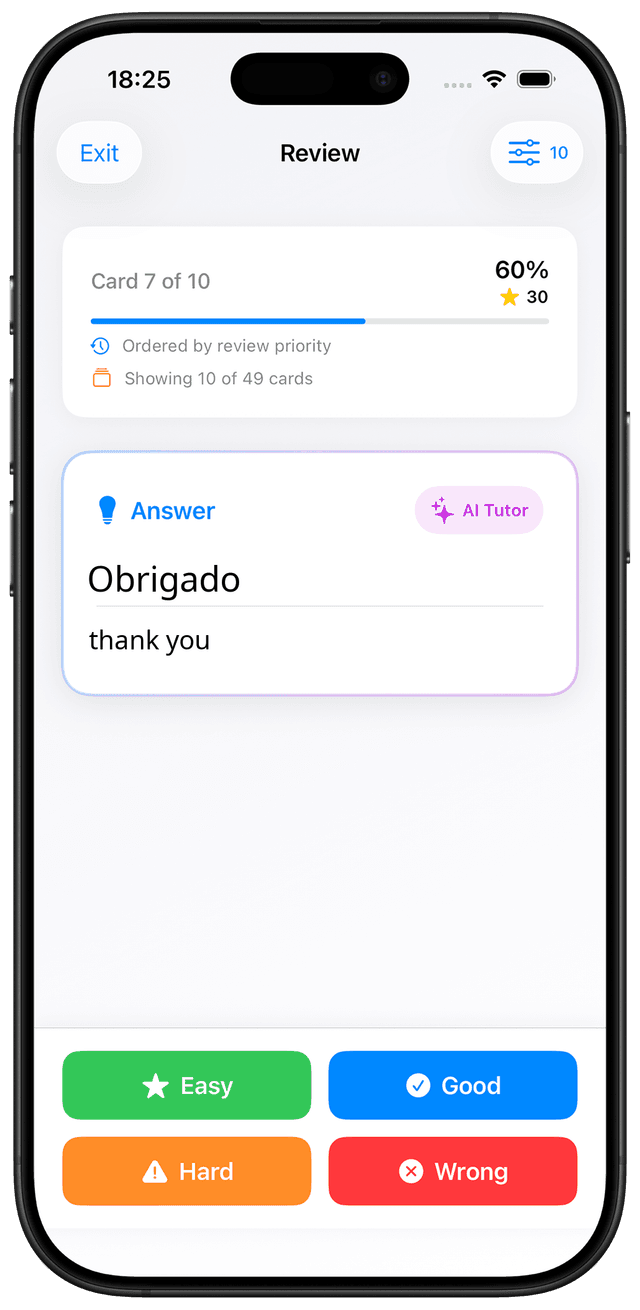
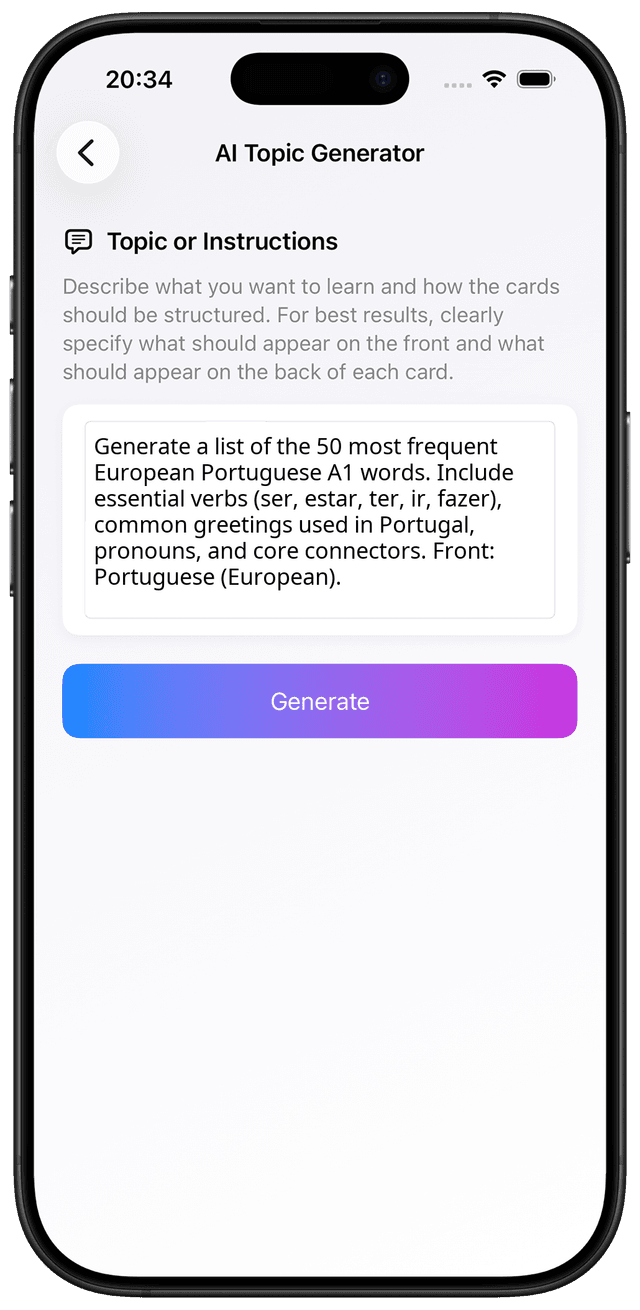
Start with the most common verbs, greetings, pronouns, and connectors used in European Portuguese. The pronunciation and phrasing in Portugal differ noticeably from Brazilian Portuguese, so starting with the right accent and vocabulary from the beginning saves you from unlearning habits later.
Why start here? Verbs like ser, estar, ter, ir, and fazer are the backbone of every sentence. Getting comfortable with how they sound in European Portuguese sets the right foundation.
The Strategy: Build cards with short phrase examples from everyday speech in Portugal so your recall connects to real spoken use.
Generate a list of the 50 most frequent European Portuguese A1 words. Include essential verbs (ser, estar, ter, ir, fazer), common greetings used in Portugal, pronouns, and core connectors. Front: Portuguese (European). Back: English.
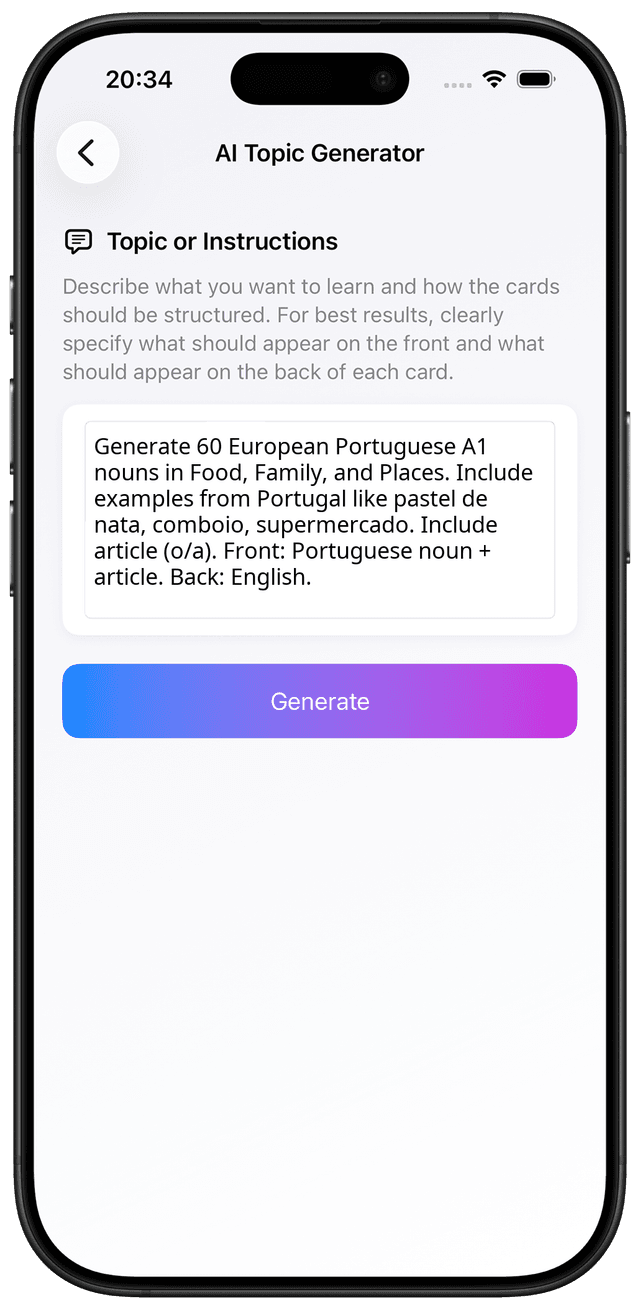
Expand into practical nouns for food, family, places, and common objects. Portuguese supermarkets, transport systems, cafes, and menus in Portugal use vocabulary that differs from Brazil in small but important ways. This phase covers what you actually need walking around Lisbon or Porto.
Why this next? You cannot describe your day without these nouns, and article usage (o/a, os/as) appears on everything from signs to menus.
The Strategy: Learn noun + article pairs with one short practical phrase, using examples grounded in Portuguese everyday life.
Generate 60 common European Portuguese A1 nouns categorized by Food, Family, and Places. Include examples specific to Portugal like pastel de nata, comboio, e supermercado. Include article form (o/a) and one practical example phrase. Front: Portuguese noun + article. Back: English.
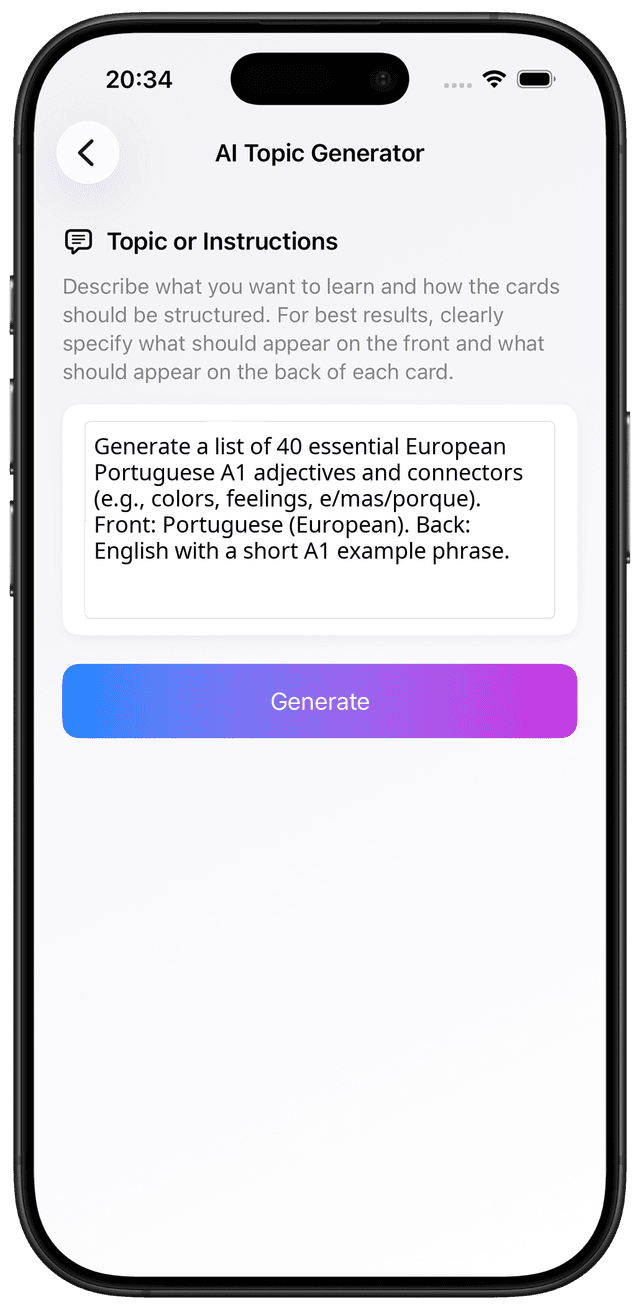
Add adjectives and connectors to move from isolated words to complete sentences. European Portuguese speakers tend toward more formal speech in everyday settings compared to Brazil, so learning the right register early matters.
Why this matters: Connectors like e, mas, and porque let you string ideas together and actually express a thought. Without them you are stuck at individual nouns.
The Strategy: Use mini-sentence cards that practice contextual recall and agreement in both gender and number.
Generate a list of 40 essential European Portuguese A1 adjectives and connectors (e.g., colors, feelings, e/mas/porque). Front: Portuguese (European). Back: English with a short A1 example phrase from everyday life in Portugal.
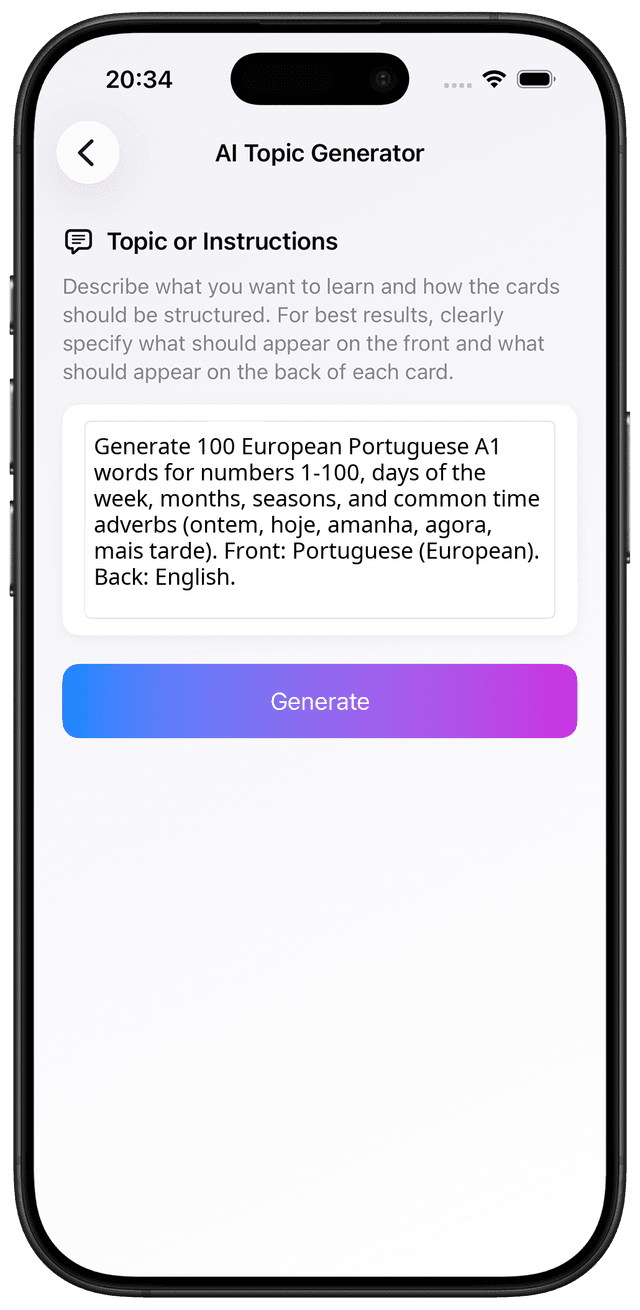
Learn numbers, weekdays, months, and the time expressions Portuguese speakers use every day. Train schedules, appointment times, and opening hours are unavoidable the moment you step off the plane.
Why this is vital: Time expressions appear in transport, restaurants, and almost every practical interaction you will have in Portugal.
Generate 100 European Portuguese A1 words for numbers 1-100, days of the week, months, seasons, and common time adverbs (ontem, hoje, amanha, agora, mais tarde). Front: Portuguese (European). Back: English.
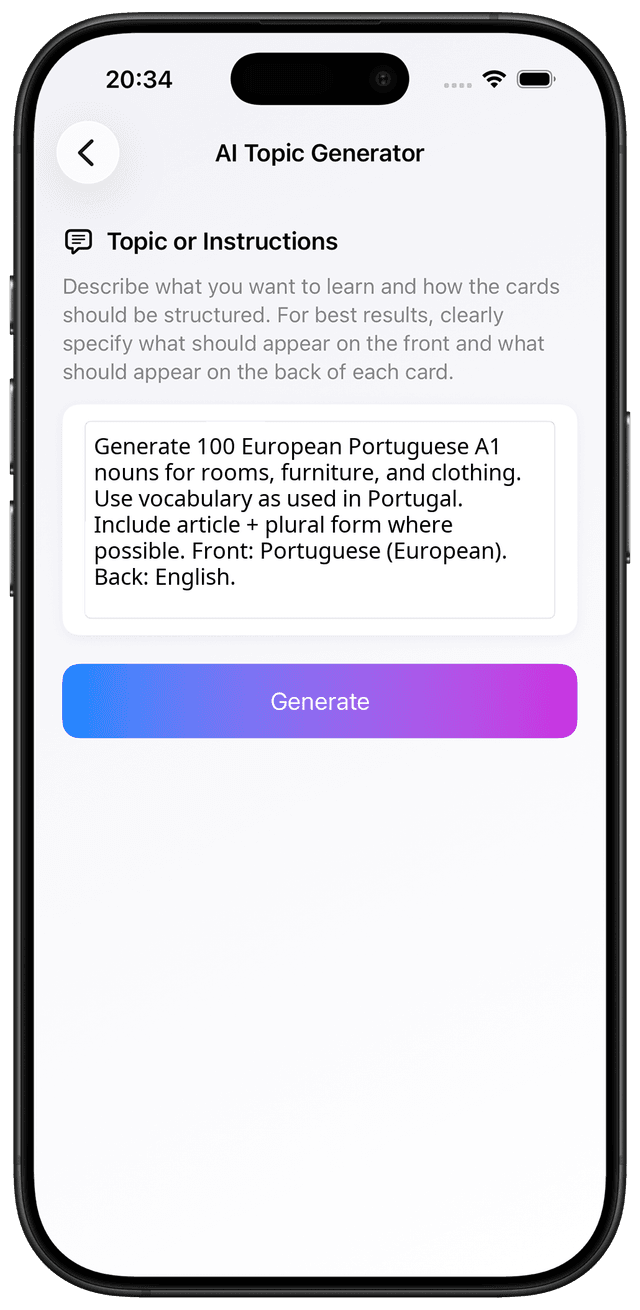
Learn the words for rooms, furniture, clothing, and daily routine actions so you can talk about where you live and what you do each day. Home vocabulary is also where learners encounter some of the clearest differences between European and Brazilian Portuguese.
Goal: Describe your home and daily habits in European Portuguese without defaulting back to English or Brazilian variants.
Generate 100 European Portuguese A1 nouns for rooms, furniture, and clothing. Use vocabulary as used in Portugal. Include article + plural form where possible. Front: Portuguese (European). Back: English.
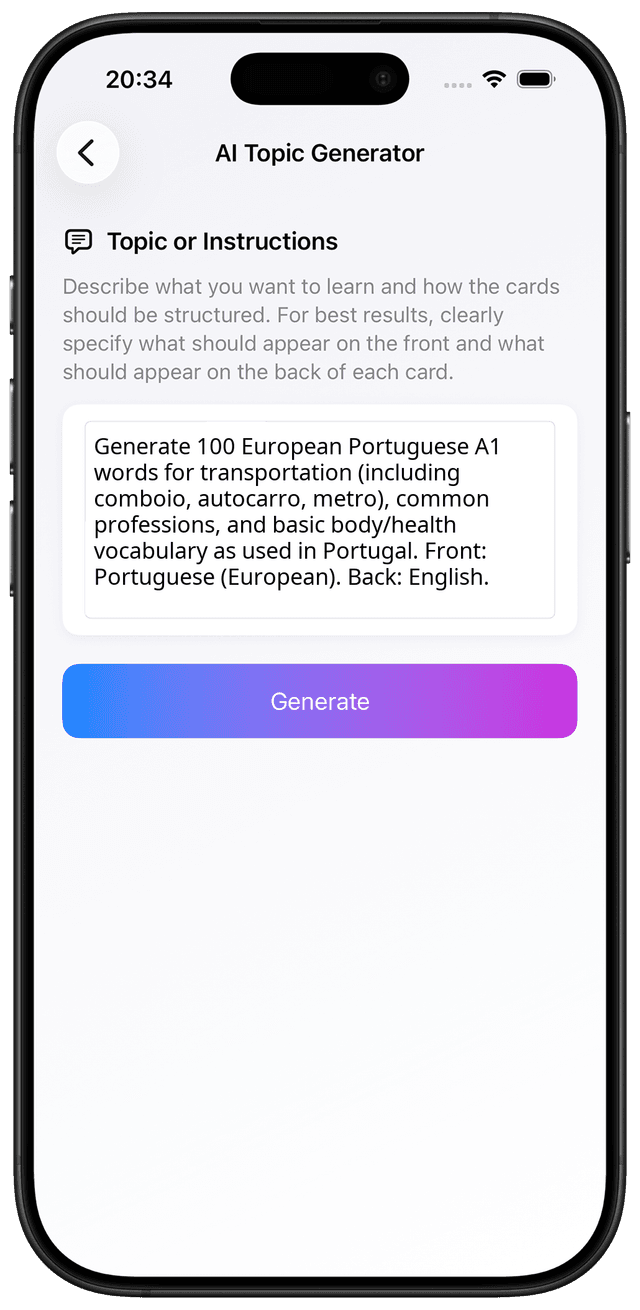
Cover transportation vocabulary, common professions, and basic health language so you can handle practical situations in Portugal. Knowing how to ask for directions to the farmacia or buy a comboio ticket on your own is a real milestone.
Why now? This vocabulary covers the situations where beginner mistakes cost you the most. Getting these right early builds genuine confidence.
Generate 100 European Portuguese A1 words for transportation (including comboio, autocarro, metro), common professions, and basic body/health vocabulary as used in Portugal. Front: Portuguese (European). Back: English.
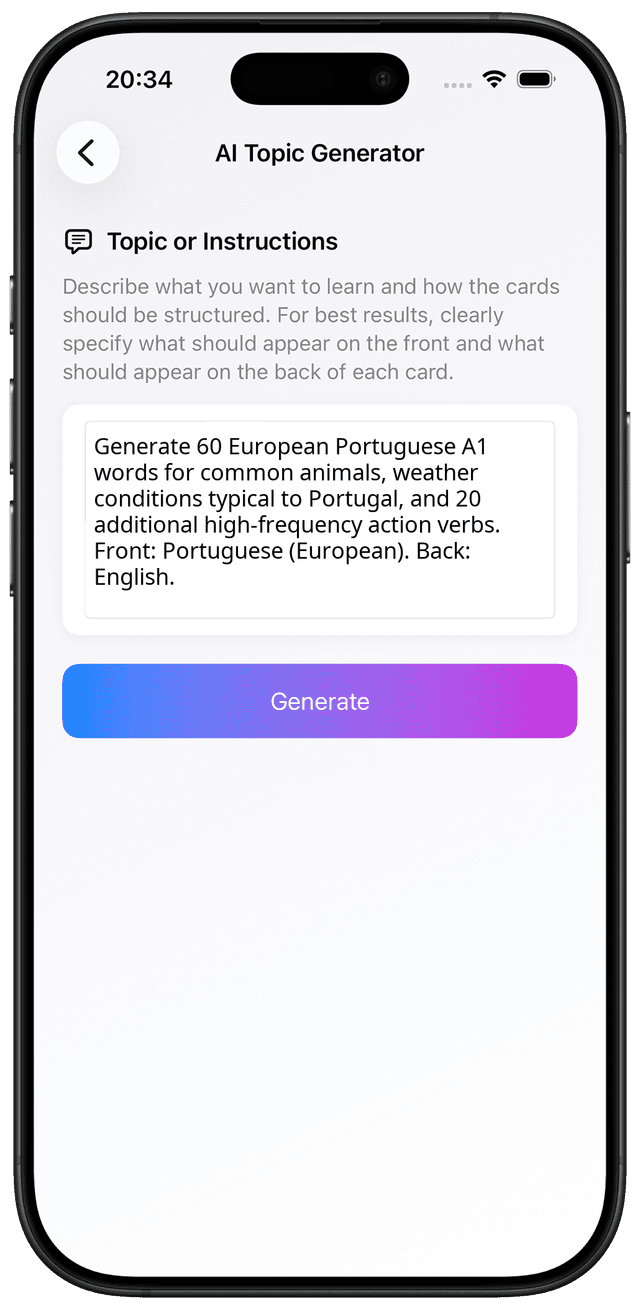
Round out your A1 vocabulary with action verbs, weather terms, animals, and nature words. Weather talk is especially practical in Portugal, where people comment on rain, sun, and wind as naturally as saying hello.
Milestone: With this phase complete, you have a solid A1 vocabulary base in European Portuguese and can manage most short everyday conversations with confidence.
Generate 60 European Portuguese A1 words for common animals, weather conditions typical to Portugal, and 20 additional high-frequency action verbs. Front: Portuguese (European). Back: English.
MindCards combines active recall and spaced repetition to move European Portuguese vocabulary from passive recognition into active use.
Keep this deck in daily rotation to lock in verb patterns, high-frequency nouns, and practical phrase chunks. When you are ready, the A2 guide picks up where this one leaves off with past tenses, reflexive verbs, and more complex everyday language.
Build practical European Portuguese for daily life in Portugal with smart flashcards, AI deck generation, and spaced repetition designed for long-term retention.